Skip to content

How We Teach

Every Key Idea Comes Back Deeper

Your child meets every key idea again from 3 to 18, each time deeper.

REMAT is the spiral curriculum behind every OpenKids art programme, developed in Singapore by TAFA Group, the education group behind OpenKids, on Jerome Bruner's theory.

REMAT Five Modules

Five Ideas That Shape How We Teach

Choose A Module · Arrow keys move

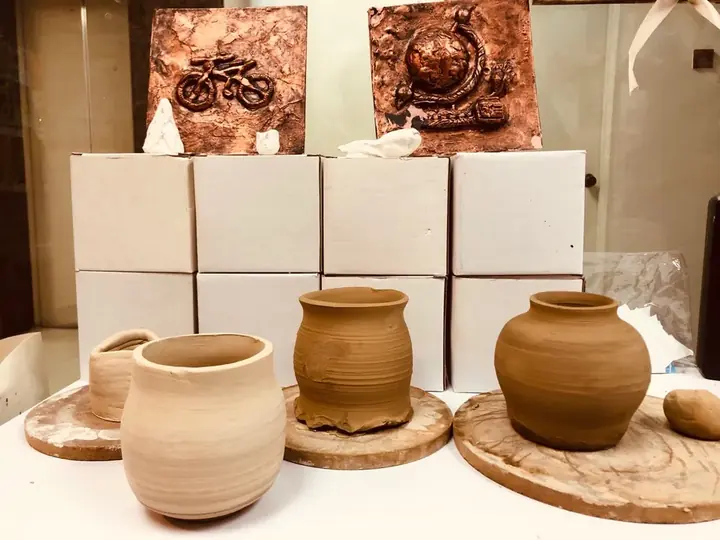
Wheel-thrown clay pots in front of two copper relief plaques

R Regroup

New Teachers And New Friends

As children grow, classes and teachers rotate, and each teacher brings a different artistic speciality. Every regroup opens a new field of art for the child, and new friendships for the whole family.

The Teacher
Rotates by speciality as children grow
Your Child
A child who has grown through one field of art meets the next
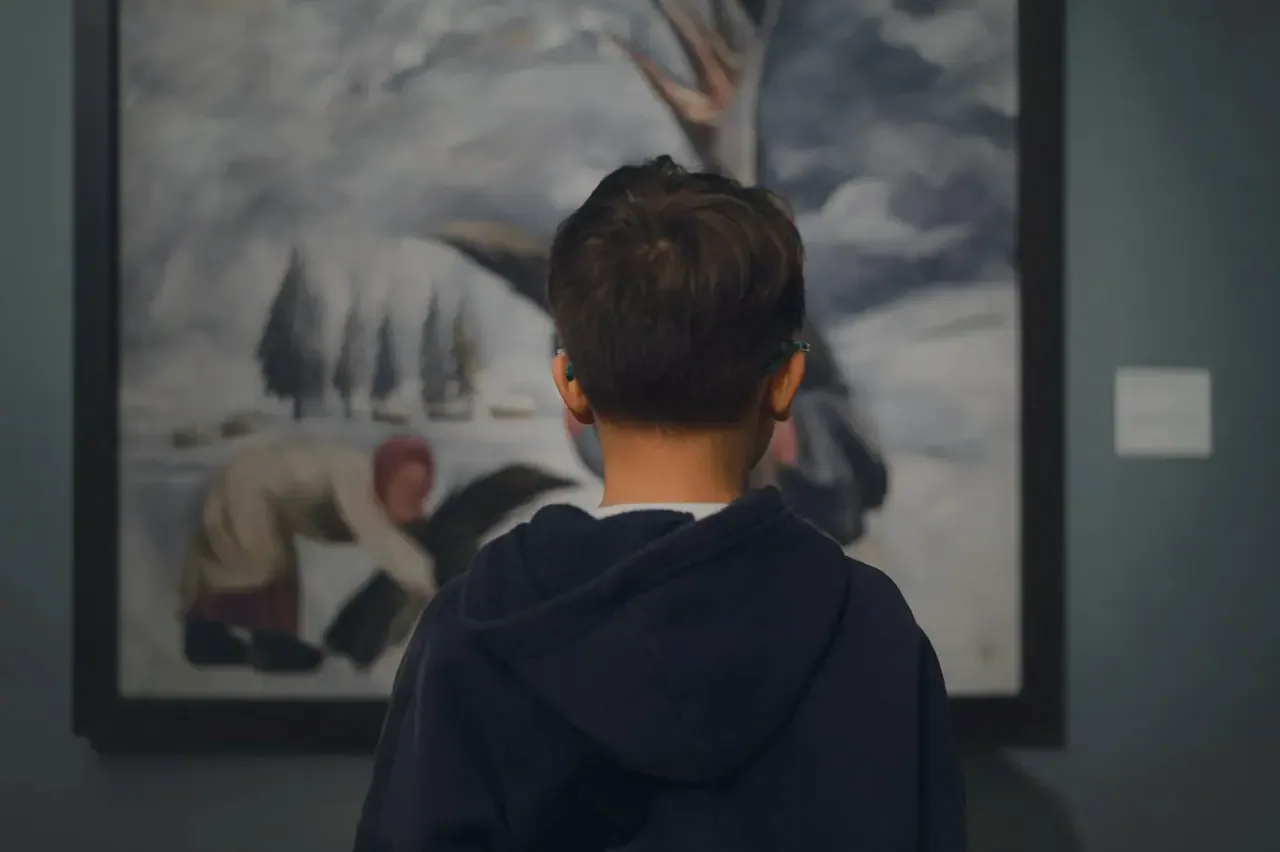
A boy looking up at a large framed landscape in a museum

E Extend

Out Into The World

From outdoor sketching to museums and overseas study trips, children go wherever art lives.

See it outside the studio
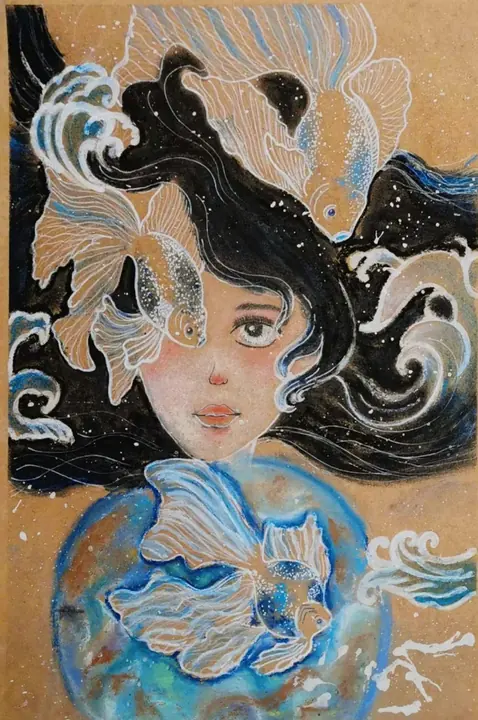
A girl whose flowing hair becomes ocean waves, with goldfish swimming through it

M Multi

One Idea Many Materials

One idea can take many forms. Working across mediums and disciplines, children choose the language that most fully expresses their own thinking.

The Teacher
Clay, paper, paint, print and light are laid out before the idea is settled
Your Child
Choosing the medium is part of the thinking
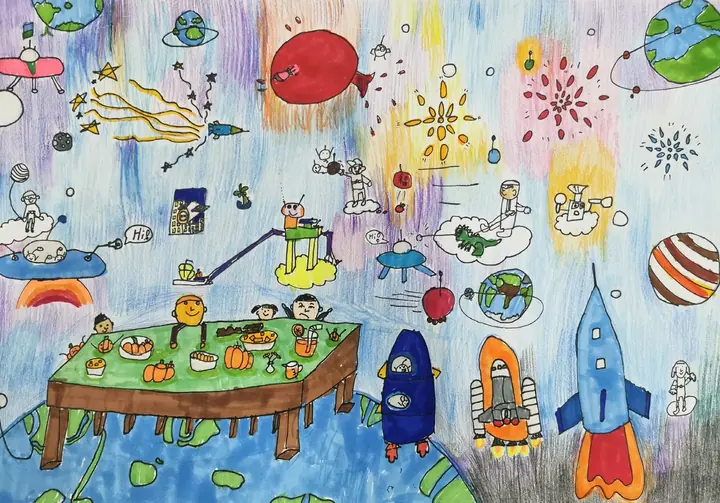
Astronauts sharing a feast at a long table floating in space, in marker and colour pencil

A Atman

We Never Draw Over Their Ideas

Each child observes, questions and solves in their own way. Confidence grows from there.

The Teacher
The teacher's pencil stays off the child's paper
Your Child
A work that is their own
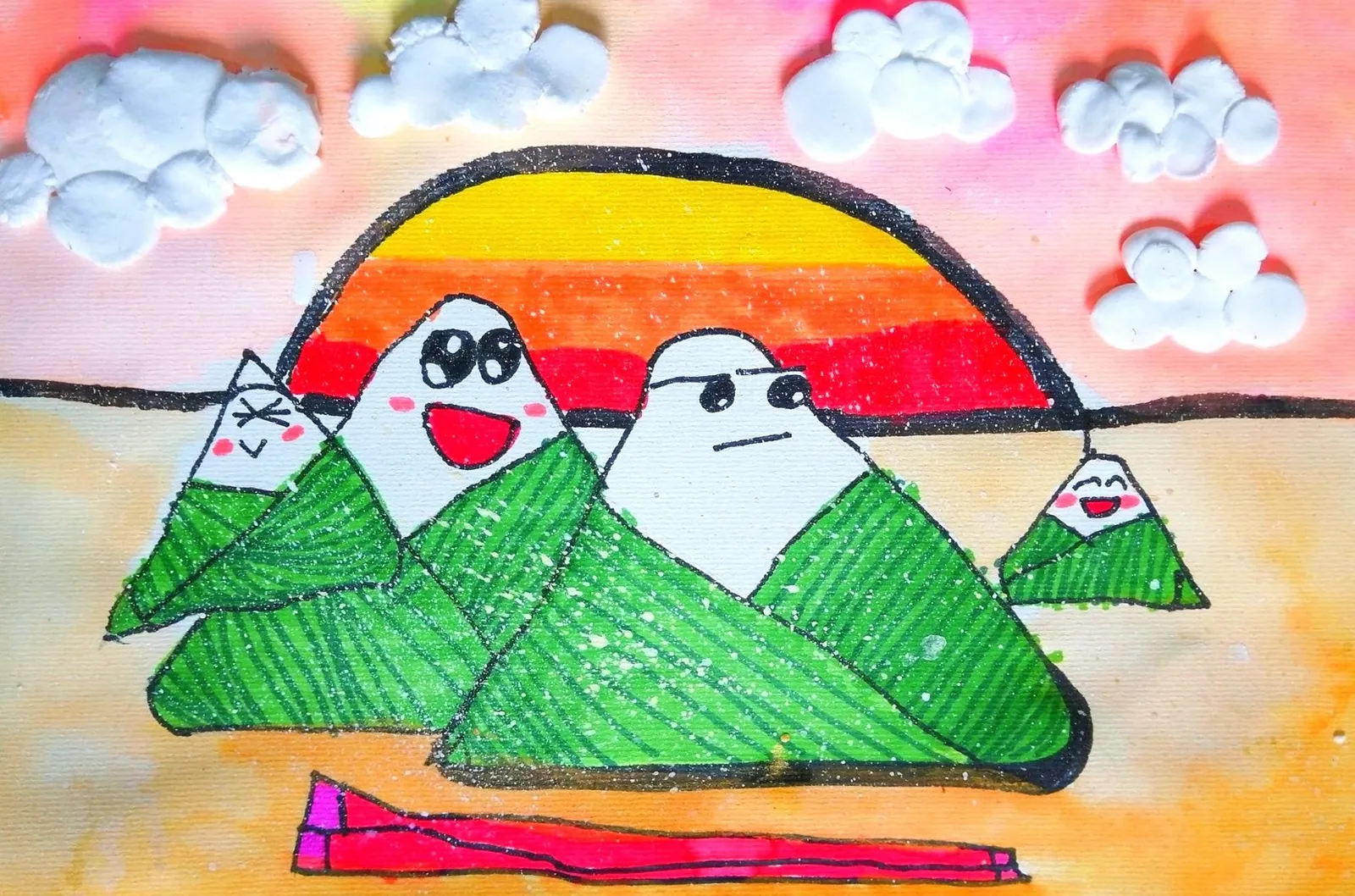
Smiling zongzi dumplings stacked like mountains under a striped sun and clay clouds

T Theme

Every Lesson Starts With A Question

Every lesson begins with a theme, not a textbook. Led by questions, children explore art, culture and the wider world, then create from what they have come to understand.

The Teacher
Plans the theme and the question
Your Child
The child's own answer to the question becomes the work

The Spiral In Practice

Colour Grows Up With Them

Colour is never taught once. It runs from a first mixing at three to a personal palette in the portfolio years.

Choose An Age · Arrow keys move

  1. Ages 3–4 First Acquaintance

    Learn the proper names of colours and mix two of them.

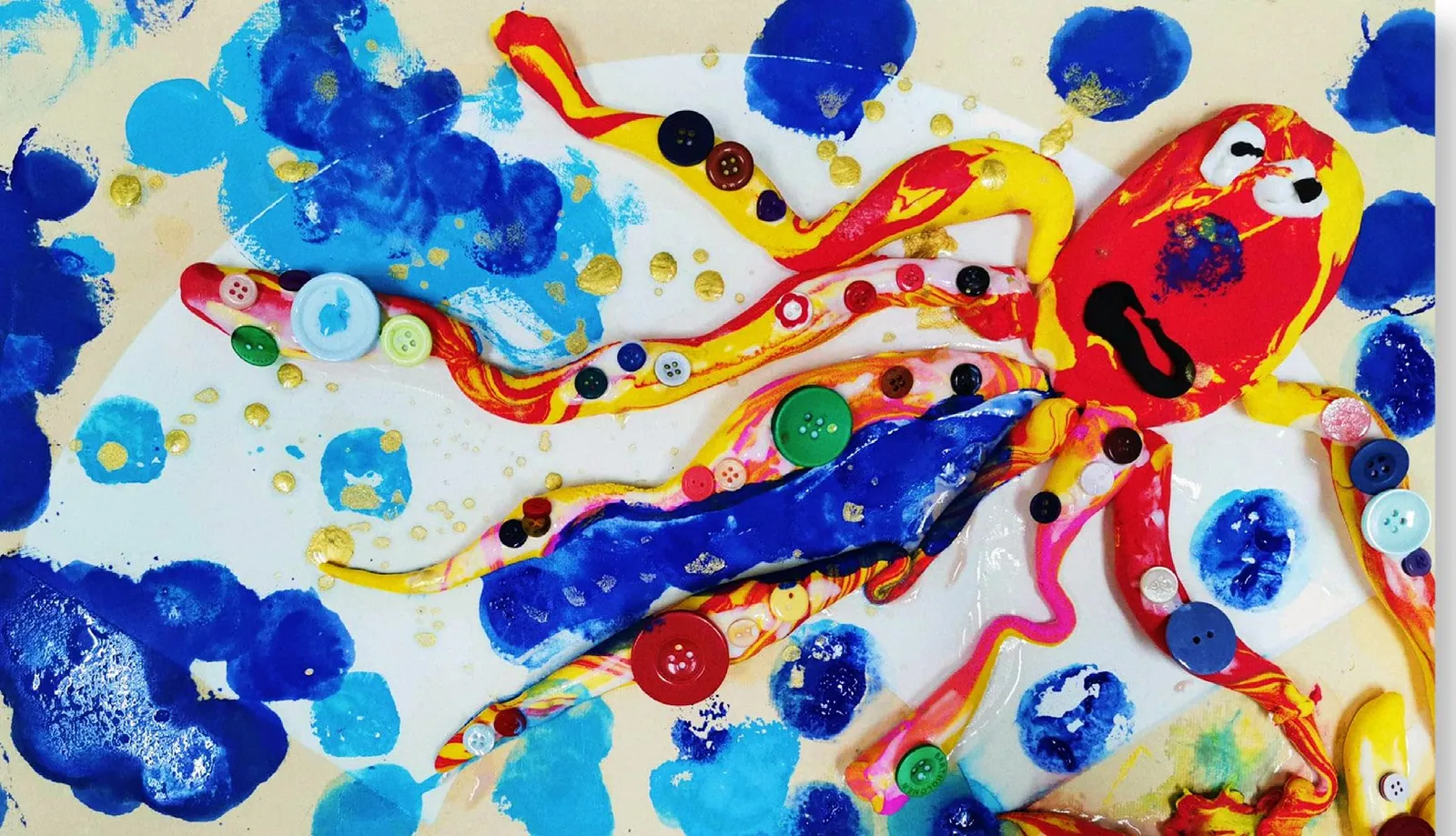
    A clay octopus family decorated with buttons
    Octopus Is Coming Ages 3–4
  2. Ages 4–5 Pioneering

    Put complementary colours to work.

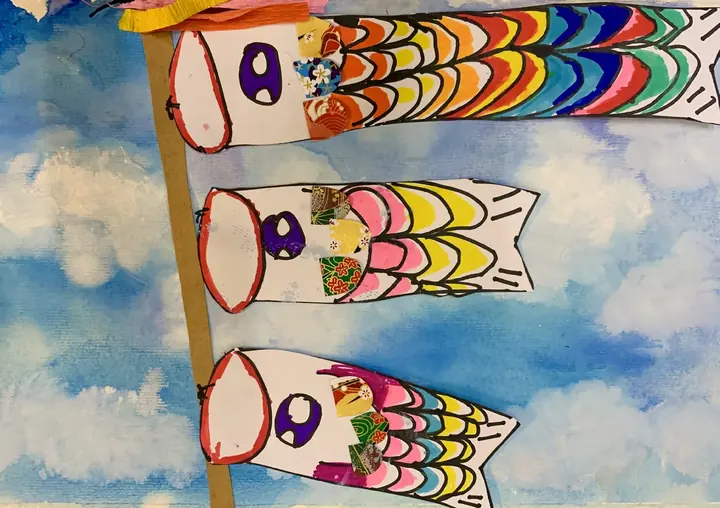
    Koinobori carp streamers in washi paper over a watercolour sky
    Koinobori Ages 4–5
  3. Ages 5–6 Breakthrough

    Distinguish analogous, complementary, warm and cool colours.

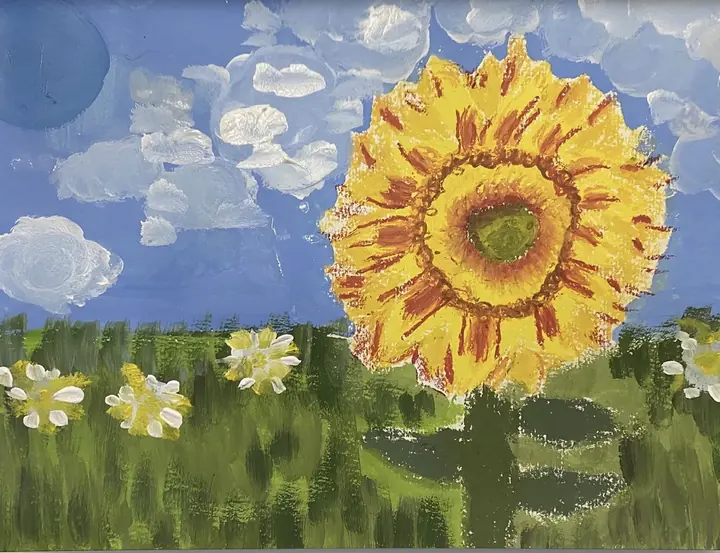
    A large sunflower with a heavily textured oil pastel head against an acrylic sky and meadow
    Sunflower Ages 5–6
  4. Ages 6–8 Readiness

    Study colour as a system: value, saturation and hue.

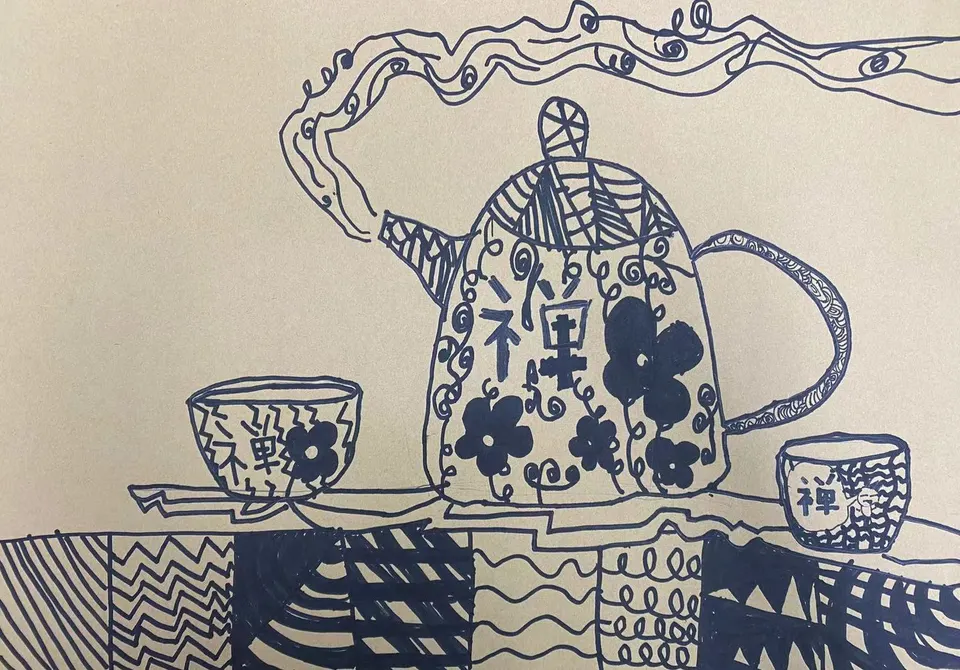
    A teapot and two cups covered in line patterns on kraft paper, with patterned steam rising from the spout
    Blue Tea Set Ages 7–8 Line and pattern
  5. Ages 8–10 Early Professional

    Relate an object's local colour to the sketch.

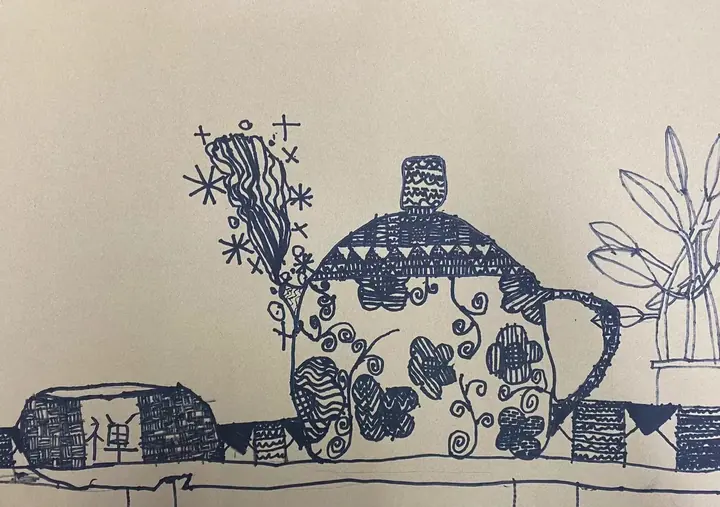
    A teapot covered in fine line patterns on a shelf of decorated tiles, drawn in blue marker on kraft paper
    Beautiful Tea Set Ages 9–10 Pattern that follows a form
  6. Ages 10+ Advanced Professional

    Oil and Chinese painting anchor the stage, and students choose their medium with intent.

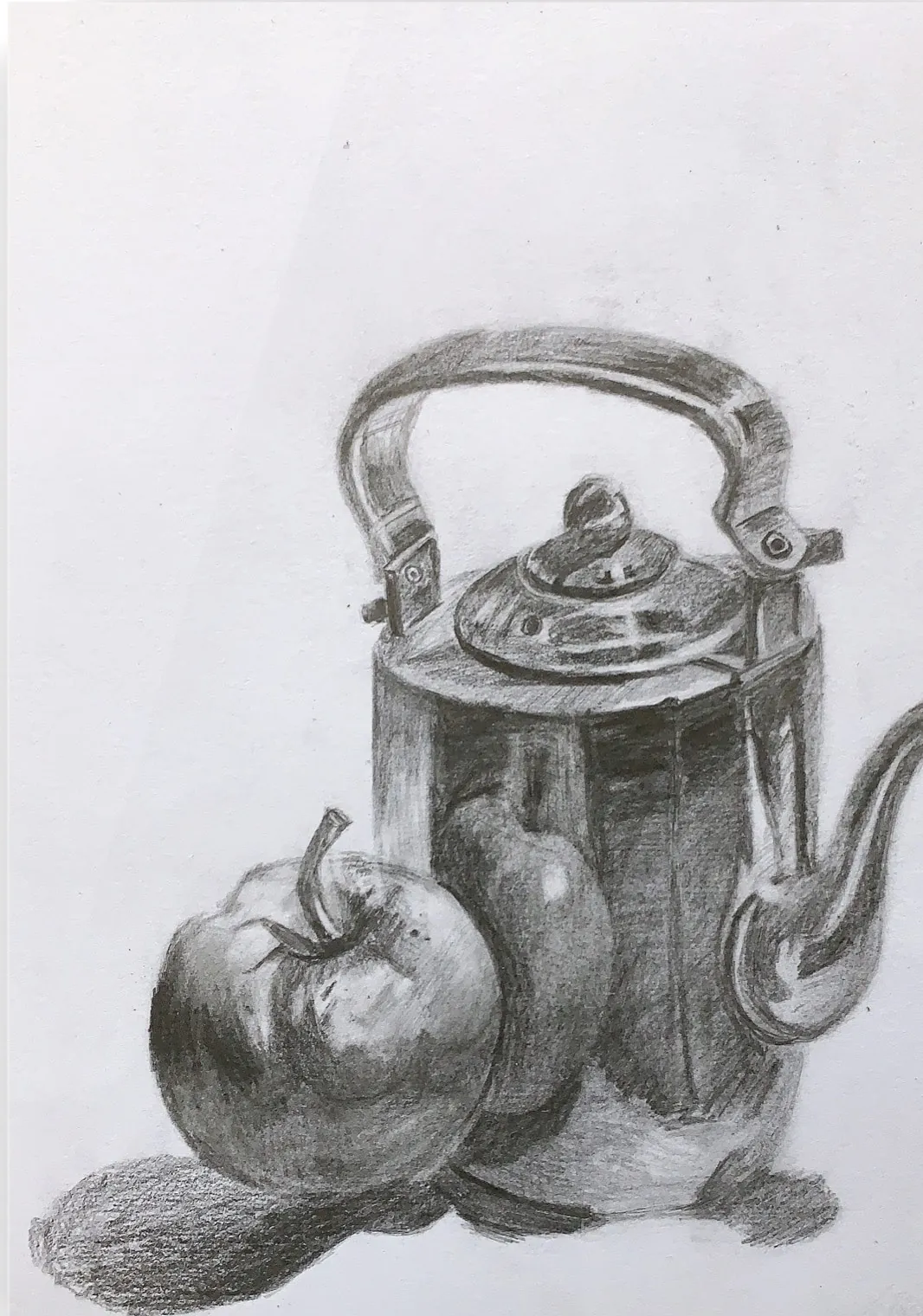
    A pencil still life of a metal kettle with an apple and a pear casting strong shadows
    Kettle And Apple Ages 10–11 Tone and cast shadow
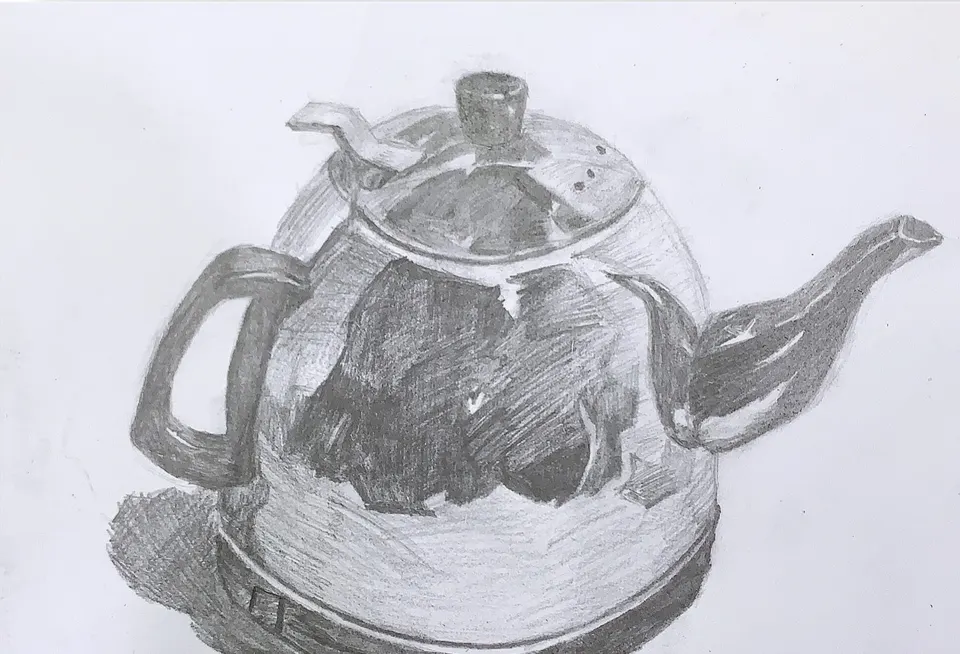
    A pencil still life of a glass electric kettle, its reflections and a soft cast shadow
    Glass Kettle Ages 12–13 Reflection and transparency
  7. Ages 16+ Portfolio Preparation

    Many mediums held with real proficiency, the breadth a university portfolio asks for.

    From Sketchbook To Portfolio

Skills For Life ATL

Skills That Outlast Any Picture

Knowledge gives a child a fish. The IB Approaches to Learning (ATL) teach a child to fish.

ATL is a skills framework from the International Baccalaureate that many schools use.

We teach its five skills inside every art lesson; this is not an IB course, and we claim no IB authorisation.

Choose A Skill · Arrow keys move

Thinking

Critical and creative thinking: asking better questions, not only finding answers.

In The Studio

Original ideas before correct answers.

Communication

Expressing ideas clearly: in words, in images, in artworks.

In The Studio

Work that can explain itself, and a child who can too.

Social

Listening, collaborating and creating together.

In The Studio

Team canvases, critique circles, shared walls.

Research

Finding, weighing and using information, led by curiosity.

In The Studio

Looking hard at the world before drawing it.

Self-Management

Organising time, materials and emotions: learning how to learn.

In The Studio

Finishing pieces, keeping folios, dating every sketchbook page, owning progress.

Let Them Paint The Apple Blue

A blue apple is a child deciding, and deciding is what we are teaching.

Why Art

Art Is The Medium Not The Destination

Through art we grow independent thinkers, lifelong learners and active global citizens.

What Stays After The Paint Dries

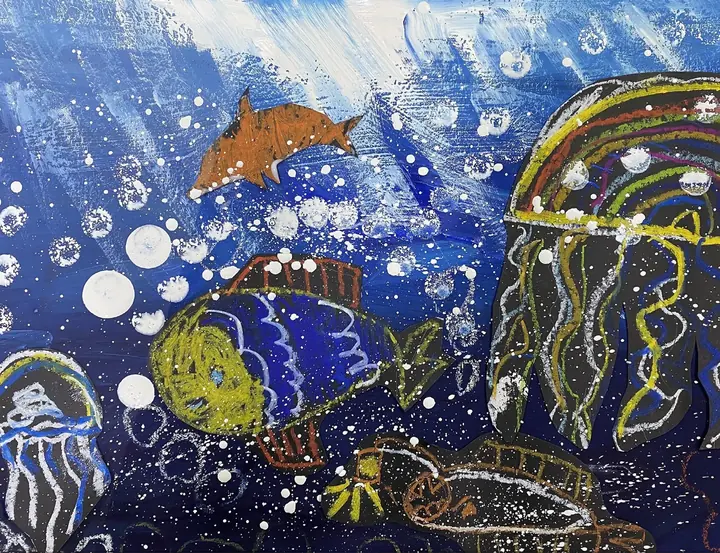
A deep blue underwater scene with light rays, a dolphin, a patterned fish and jellyfish

Lasting Joy

To achieve happiness through the cultivation of arts creativity

Seven Points Blue Ages 5–6

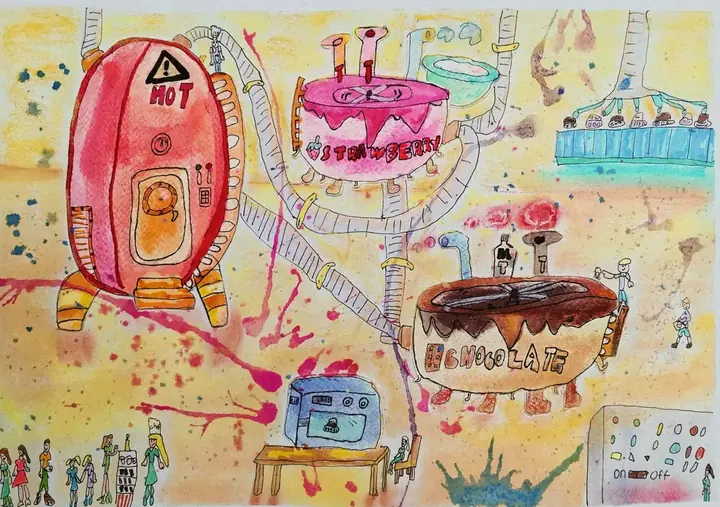
  • A busy chocolate factory with a rocket-shaped oven, conveyor belts and a giant cake

    Sharper Thinking

    To stimulate thinking through art lessons and activities

    Chocolate Factory Ages 7–8

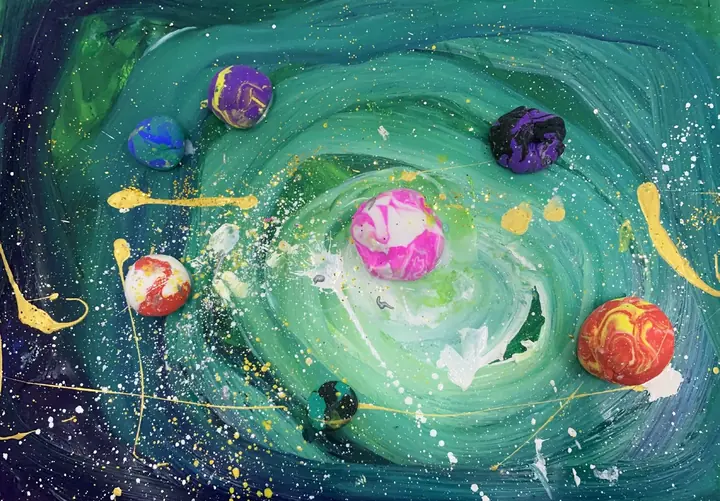
  • A swirling acrylic galaxy with marbled clay planets

    Imagination As A Habit

    To elevate imagination through innovative habits

    Starry Sky Ages 3–4

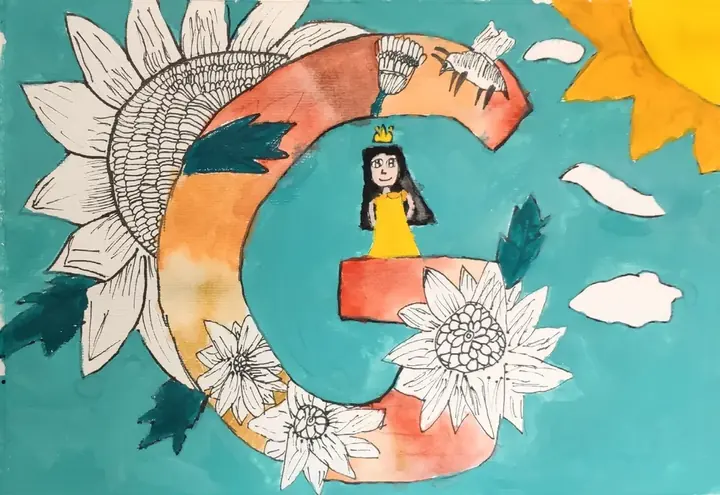
  • A large letter G wrapped in line-drawn sunflowers with a small figure standing inside it

    Subjects Without Walls

    To develop interdisciplinary thinking through art inspiration

    The Letter G Ages 8–9

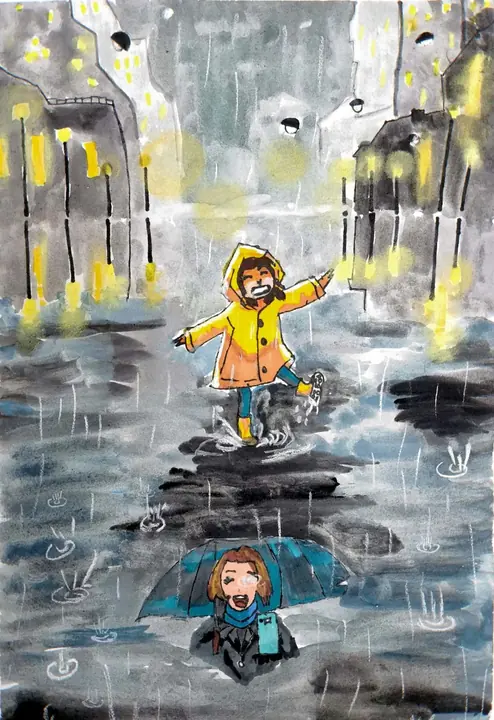
  • A child in a yellow raincoat splashing through a puddle in the rain, in loose watercolour

    Quiet Confidence

    To learn decisiveness through repeated trial and error

    Rainy Reflections Ages 10–11

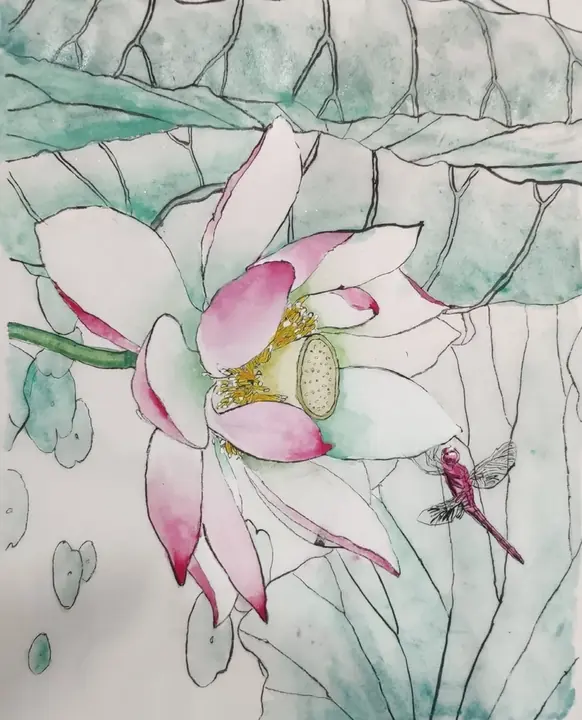
  • A gongbi painting of lotus blossoms and a dragonfly in layered mineral colour

    An Eye For Beauty

    To appreciate beauty through arts training

    Lotus And Dragonfly Ages 12–13

When AI Can Paint Too

Machines Answer Children Ask

AI can already paint.It cannot want to.

  • What AI Does Well: Solving a set problem

    Ask Before You Prompt

    The first thing we train is asking a better question than the machine is given.

    Where It Lives: The Theme module

  • What AI Does Well: Generating a thousand images

    Judge What Is Good

    Deciding which image is any good is a trained human skill, and training it is what aesthetic education means.

    Where It Lives: Art history and appreciation, at every stage

  • What AI Does Well: Imitating a style

    Draw On Screen

    The drawing skill built on paper carries straight over to the screen.

    Where It Lives: The Design direction and the Digital Art discipline

  • What AI Does Well: Autocompleting a shape

    Think With Your Hands

    From a shapeless lump to a finished sculpture, a child builds three-dimensional thinking and the nerve to start over.

    Where It Lives: Sculpture and ceramics, from age 3

  • What AI Does Well: Rendering an object on screen

    Print It Real

    Ideas leave the screen as objects: model building, 3D printing and recycled-material projects.

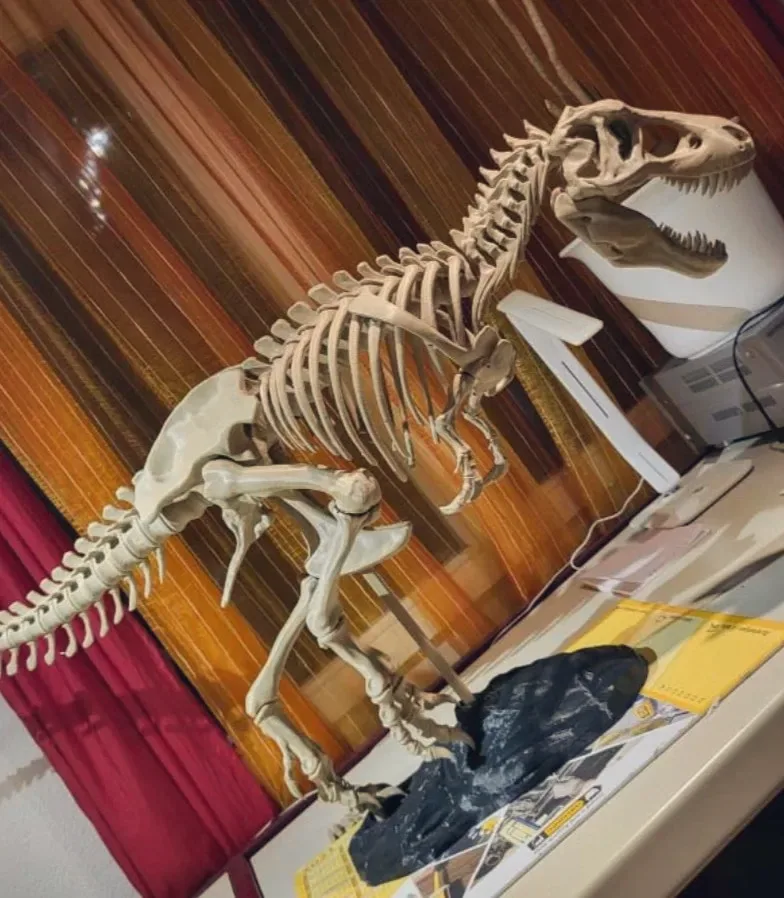
    A large 3D printed dinosaur skeleton standing on a studio table
    Modelled on screen, then printed full size in the studio.

    Where It Lives: The AI and 3D printing course3D Design in the Tech Programmes

What They Learn

From Clay To Canvas To Screen

Younger children move freely between all nine, one theme at a time.

Nine Ways To Make Art

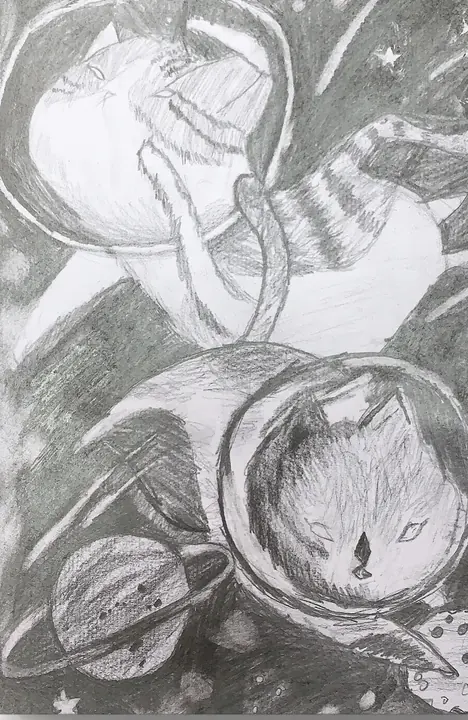
  • A pencil drawing of two cats floating in space helmets among planets and stars

    Pencil, charcoal, pen and marker: still life, observation and drawing from memory.

    Drawing

    It trains observation, which every later stage draws on.

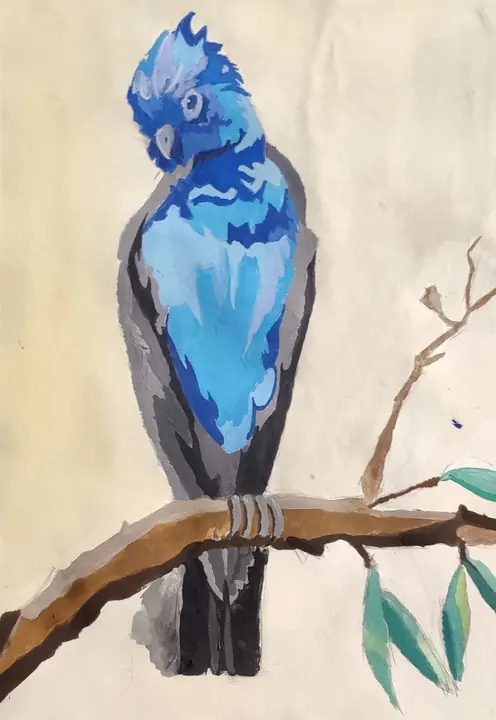
  • A blue cockatoo perched on a branch, painted in bold blocks of blue and grey gouache

    Watercolour, gouache, acrylic, oil pastel, soft pastel and oil, and Chinese painting.

    Painting

    It trains colour decisions, and in ink a brushstroke cannot be undone.

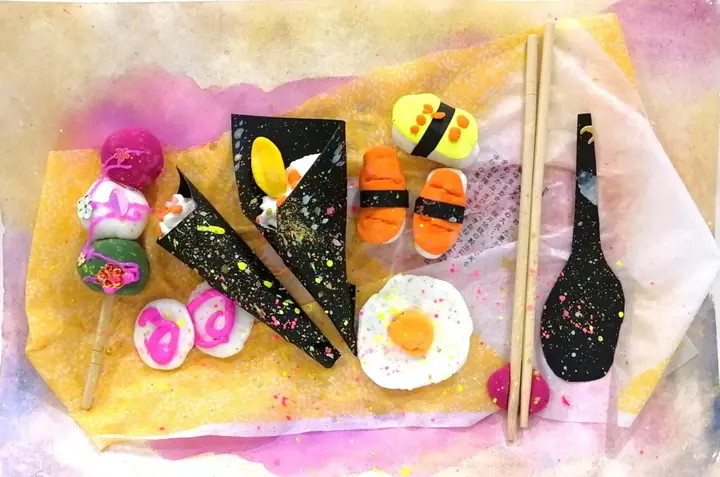
  • A clay sushi bento with dango skewers, hand rolls and rolled omelette

    Clay modelling and relief, paper sculpture and wheel-thrown pottery.

    Sculpture And Ceramics

    It trains thinking in three dimensions.

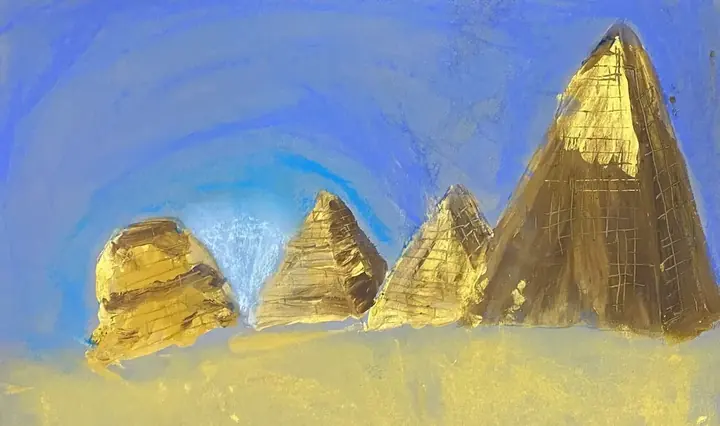
  • Golden pyramids revealed in scratch art against a blue sky

    Monoprints, scratch art and prints pulled from a plate the student made.

    Printmaking

    It trains commitment: the plate is decided before the print is seen.

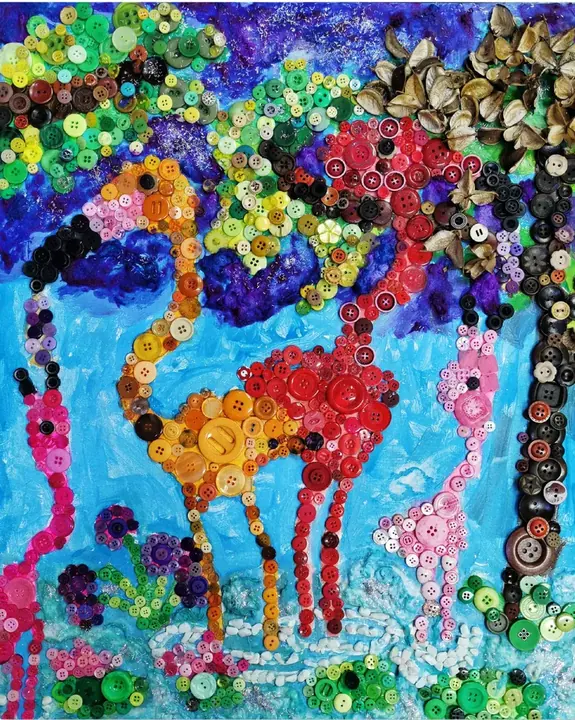
  • Three flamingos built from pink buttons and dried seed pods on a painted background

    Mixed Media

    Collage, kraft paper, buttons, seed pods, washi and light.

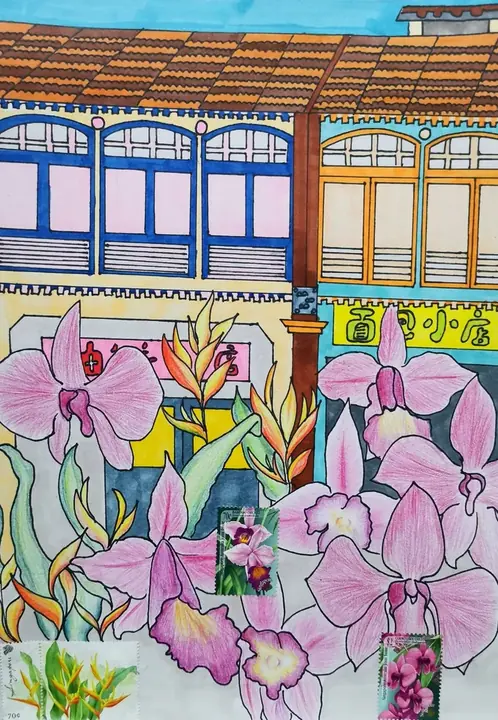
  • A postage stamp design of orchids and shophouses, with real stamps collaged in

    Graphic, letter and stamp design, design sketching, fashion and animation design.

    Design

    Every brief trains ideas shaped for a purpose.

  • Digital painting and illustration.

    Digital Art

    It trains iteration, with drawing skills carried over from paper.

  • Artists met at every stage, and the words to talk about them.

    Art History And Appreciation

    It trains looking across cultures: Chinese ink painting, Japanese ukiyo-e, African carving.

  • Parks, museums and the city, often in the school holidays.

    Sketching On Location

    It trains light and shadow, and the courage to see the world differently.

Student Work

Every Age On One Wall

Real work by students in our Singapore studios, hung youngest first.

  • A clay octopus family decorated with buttons
    Octopus Is ComingAges 3–4 Clay and buttons
  • A swirling acrylic galaxy with marbled clay planets
    Starry SkyAges 3–4 Acrylic with marbled clay planets
  • A clay sushi bento with dango skewers, hand rolls and rolled omelette
    Sushi BentoAges 3–4 Modelled clay
  • Koinobori carp streamers in washi paper over a watercolour sky
    KoinoboriAges 4–5 Washi paper streamers over a watercolour sky
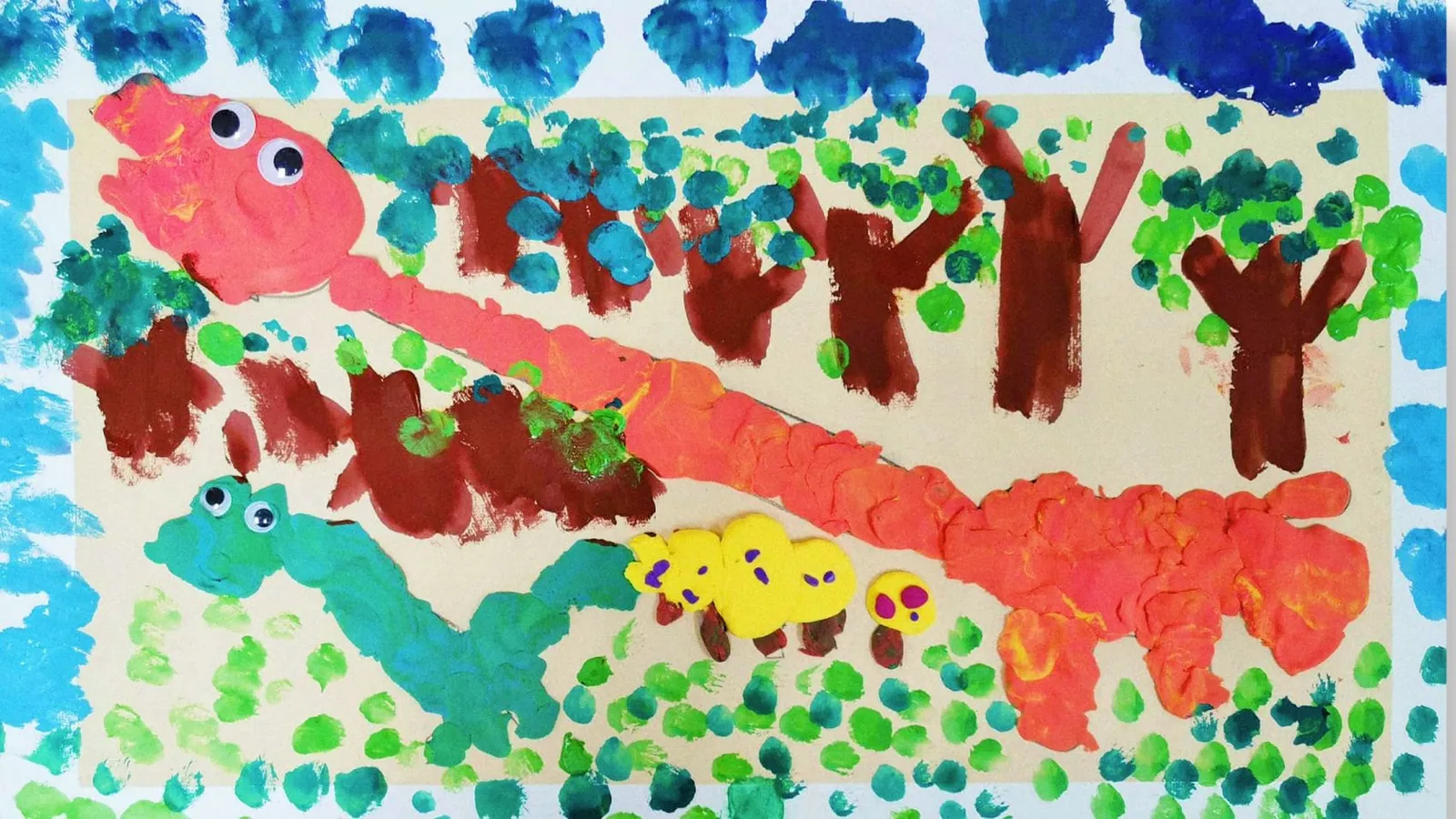
  • A clay relief of a long-necked dinosaur in a forest
    Long Neck BrachiosaurusAges 4–5 Clay relief
  • A large sunflower with a heavily textured oil pastel head against an acrylic sky and meadow
    SunflowerAges 5–6 Oil pastel and acrylic
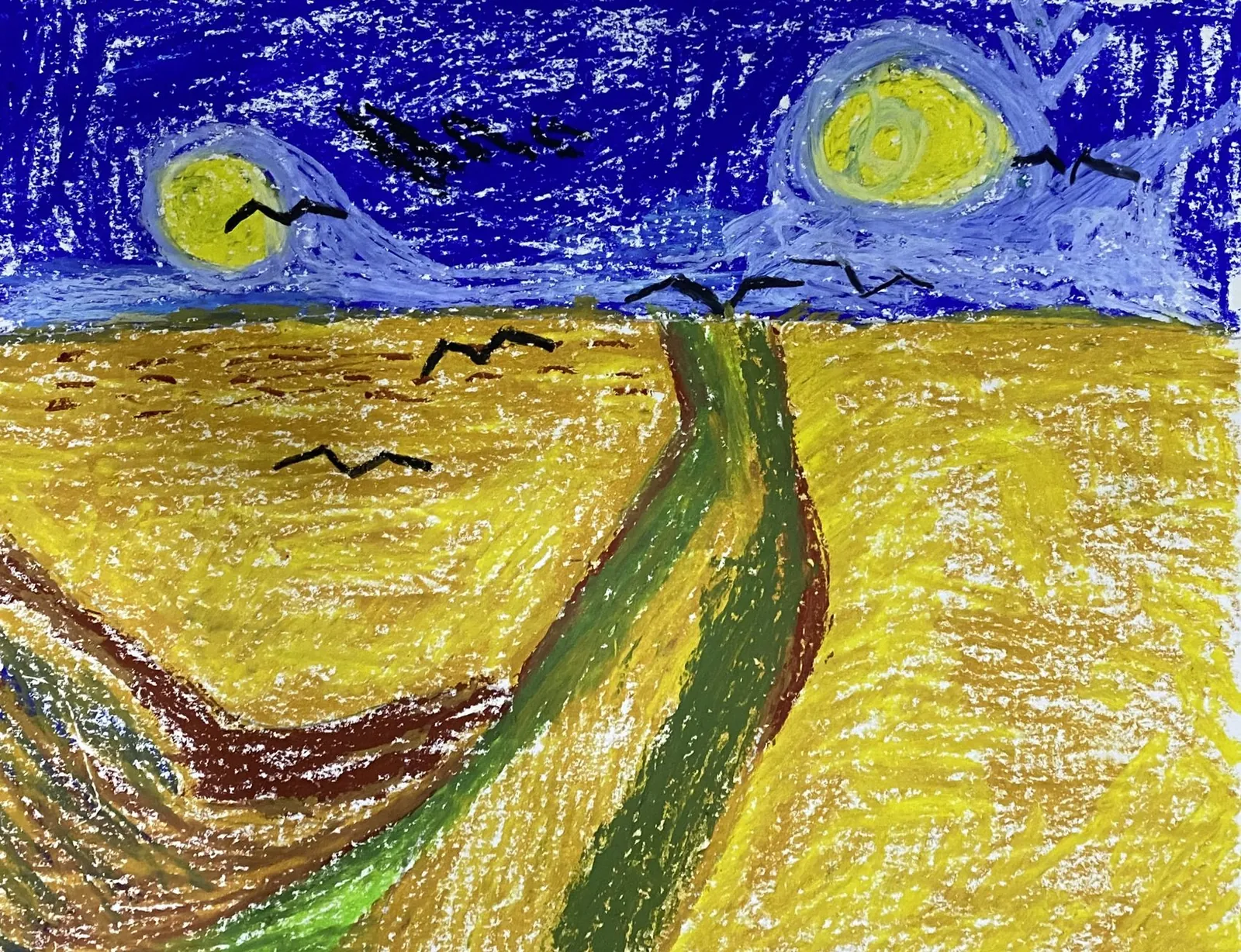
  • An oil pastel study after Van Gogh's wheatfield, with a winding path, two suns and flying crows
    Wheatfield After Van GoghAges 5–6 Oil pastel master study
  • Golden pyramids revealed in scratch art against a blue sky
    Golden PyramidsAges 5–6 Scratch art
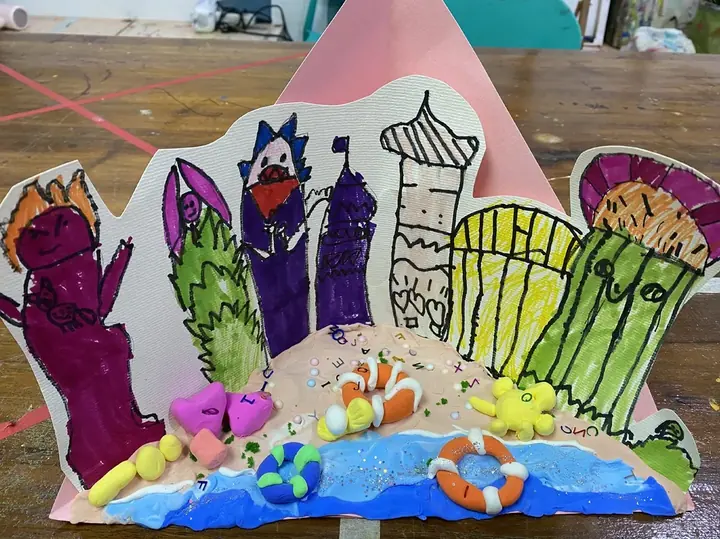
  • A standing paper cut-out of a seaside town with towers and trees behind a modelled clay beach
    Seaside TownAges 5–6 Standing paper cut-out and modelled clay
  • A deep blue underwater scene with light rays, a dolphin, a patterned fish and jellyfish
    Seven Points BlueAges 5–6 Mixed media
  • Three flamingos built from pink buttons and dried seed pods on a painted background
    FlamingosAges 5–6 Buttons and seed pods on a painted ground
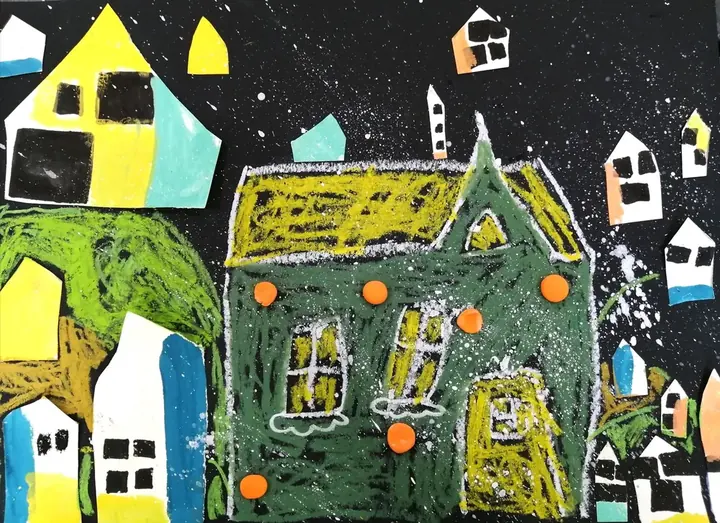
  • A snowy night town on black paper with a large oil pastel house and cut-paper cottages
    Love My HomeAges 6–7 Oil pastel and cut paper on black
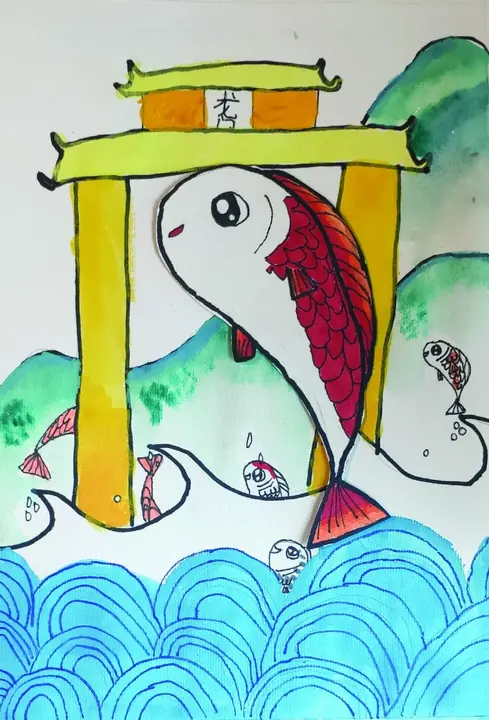
  • Red and white koi leaping through a golden dragon gate above swirling blue waves
    Carp Big SplashAges 6–8 Watercolour and collage
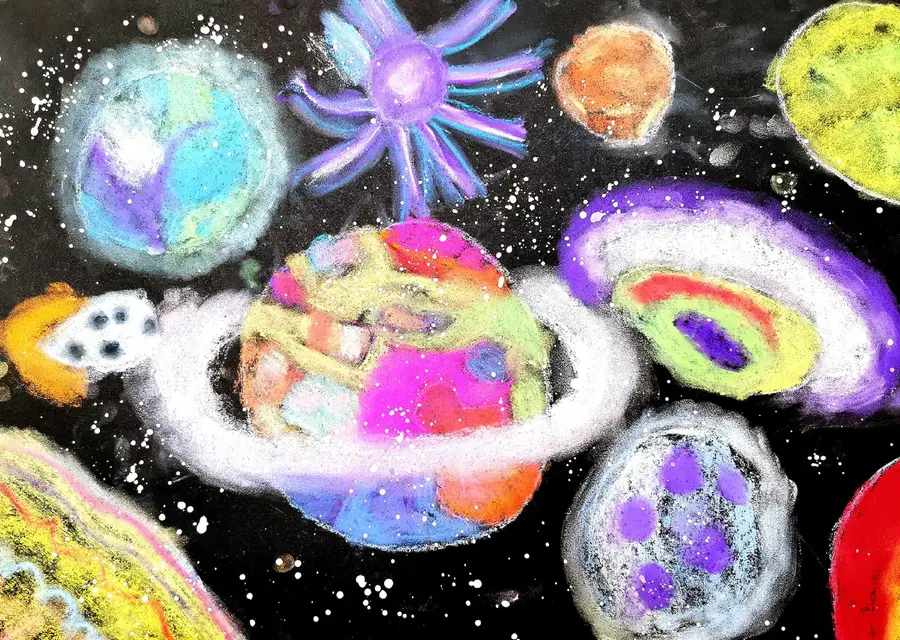
  • Glowing ringed planets, a star and a small rocket drawn in soft pastel on black paper
    UniverseAges 7–8 Soft pastel on black paper
  • A teapot and two cups covered in line patterns on kraft paper, with patterned steam rising from the spout
    Blue Tea SetAges 7–8 Marker line drawing on kraft paper
  • Astronauts sharing a feast at a long table floating in space, in marker and colour pencil
    Space FeastAges 7–8 Marker and colour pencil
  • A busy chocolate factory with a rocket-shaped oven, conveyor belts and a giant cake
    Chocolate FactoryAges 7–8 Watercolour and ink
  • A girl whose flowing hair becomes ocean waves, with goldfish swimming through it
    DreamAges 8–9 Mixed media on kraft paper
  • A large letter G wrapped in line-drawn sunflowers with a small figure standing inside it
    The Letter GAges 8–9 Letter design with line-drawn sunflowers
  • A teapot covered in fine line patterns on a shelf of decorated tiles, drawn in blue marker on kraft paper
    Beautiful Tea SetAges 9–10 Line drawing on kraft paper
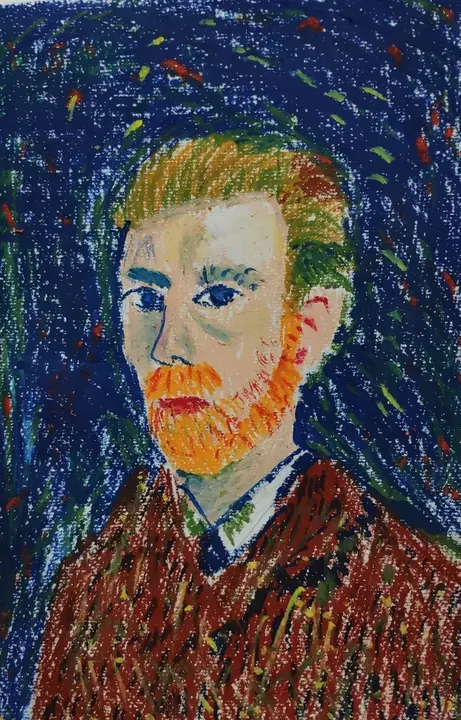
  • An oil pastel copy of a Van Gogh self-portrait in swirling strokes
    After Van GoghAges 9–10 Oil pastel master study
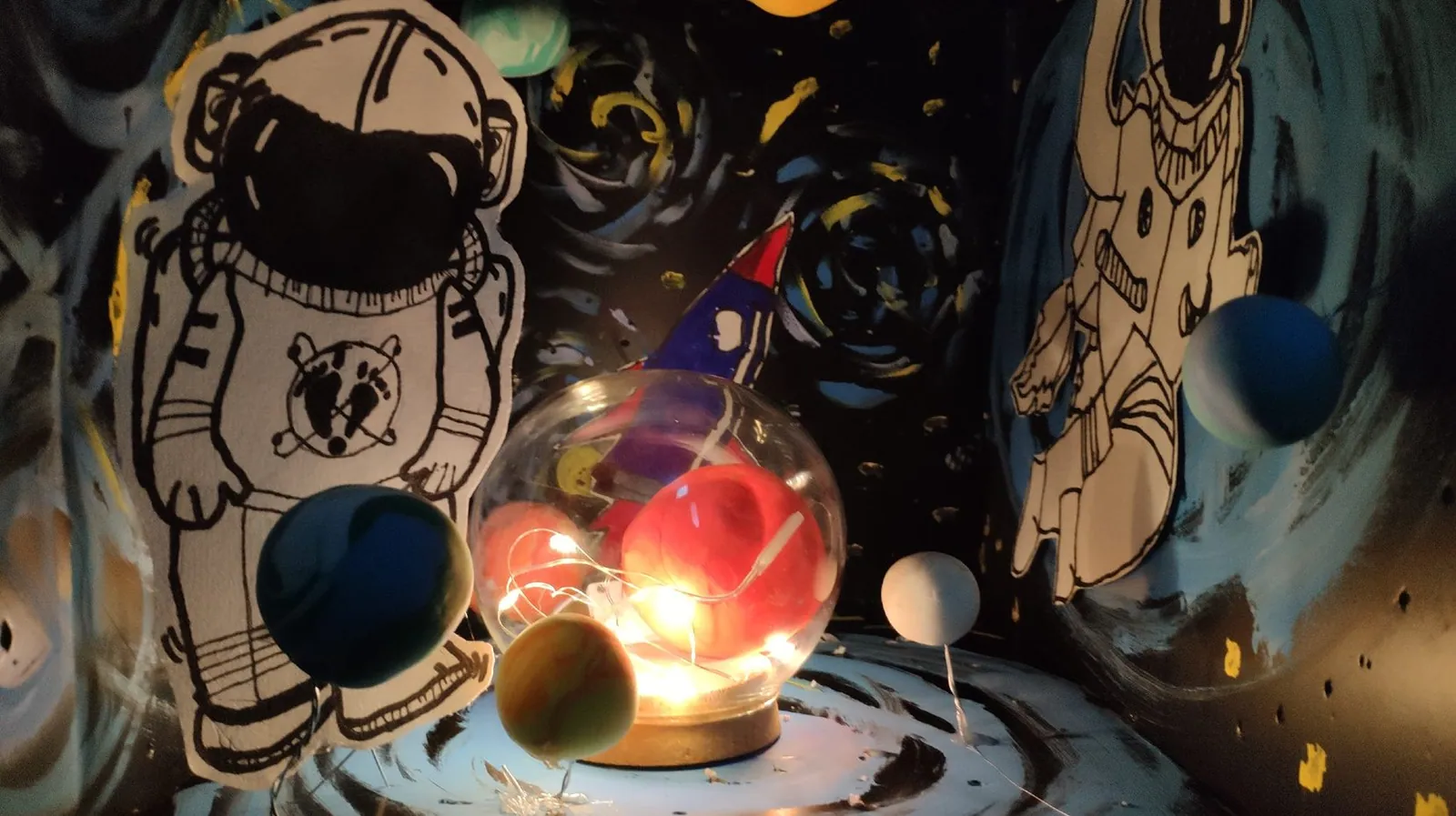
  • Clay planets and cut-paper astronauts around a glowing glass-sphere lamp
    Eight PlanetsAges 9–10 Light installation with cut-paper astronauts
  • A child in a yellow raincoat splashing through a puddle in the rain, in loose watercolour
    Rainy ReflectionsAges 10–11 Watercolour
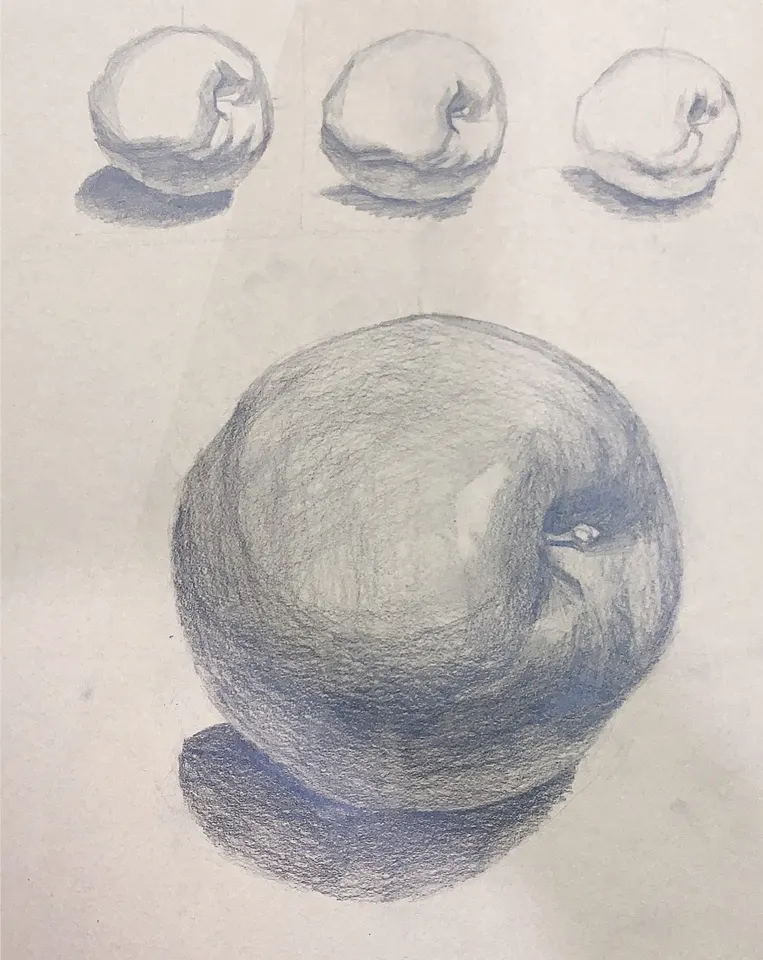
  • A pencil study sheet: three small apples worked up in tonal steps above one large, fully shaded apple
    Apple StudyAges 10–11 Pencil, worked in tonal steps
  • A pencil still life of a metal kettle with an apple and a pear casting strong shadows
    Kettle And AppleAges 10–11 Pencil still life
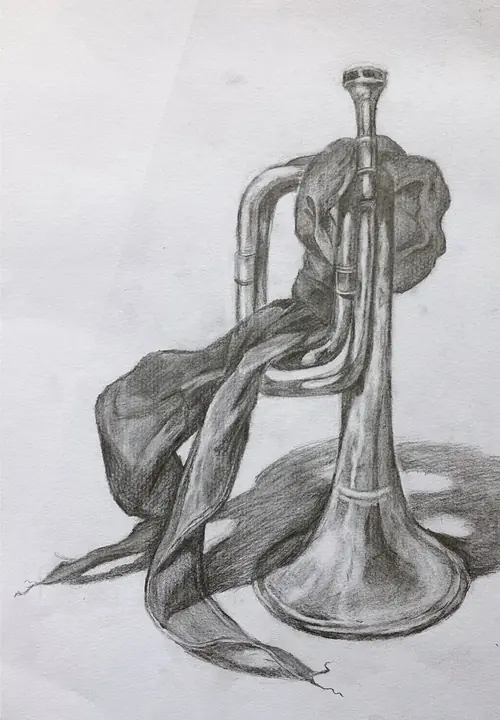
  • A pencil still life of an upright trumpet draped with a soft scarf
    Trumpet And ScarfAges 10–11 Pencil still life
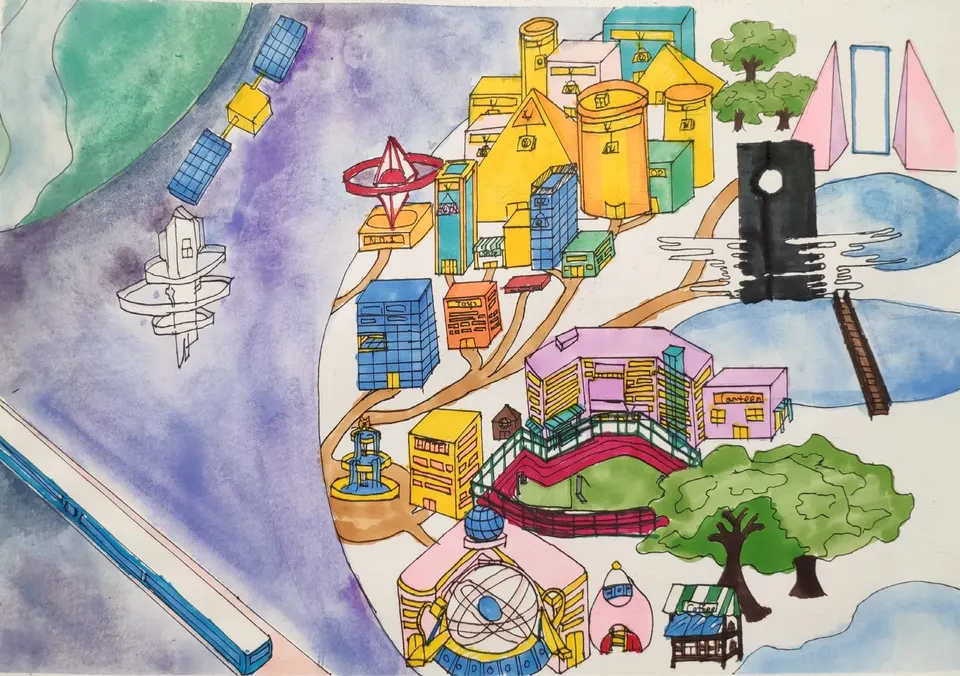
  • An aerial map of an imagined future city park with colourful towers, bridges, lakes and a monorail
    Future ParkAges 10–11 Watercolour and ink
  • A postage stamp design of orchids and shophouses, with real stamps collaged in
    Orchid StampAges 10 And Up Stamp design with collaged stamps
  • A pencil drawing of two cats floating in space helmets among planets and stars
    Cats In SpaceAges 12–13 Pencil
  • A pencil still life of a glass electric kettle, its reflections and a soft cast shadow
    Glass KettleAges 12–13 Pencil still life
  • A gongbi painting of lotus blossoms and a dragonfly in layered mineral colour
    Lotus And DragonflyAges 12–13 Gongbi in layered mineral colour
  • A blue cockatoo perched on a branch, painted in bold blocks of blue and grey gouache
    Blue CockatooAges 12–13 Gouache
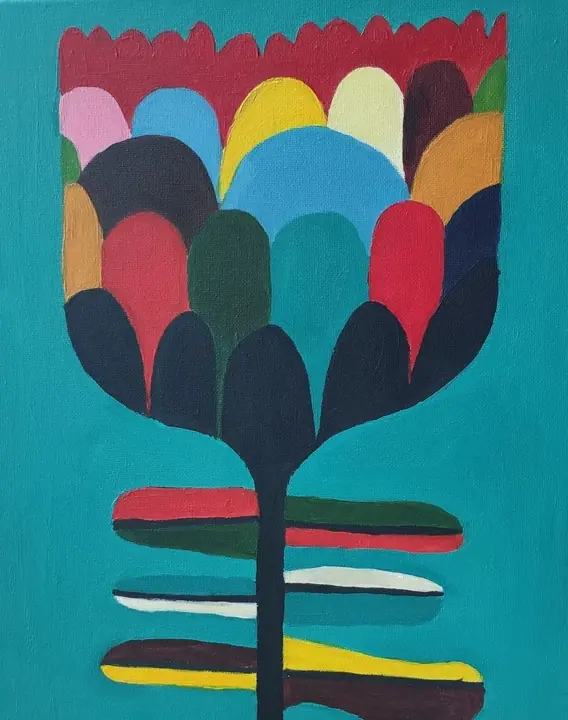
  • A protea flower built from bold blocks of colour on a teal ground, in acrylic on canvas
    Nordic FlowersAges 15 And Up Acrylic on canvas

Each piece carries its age and medium; we do not publish students' names.

From First Question To Finished Piece

How a piece like Eight Planets comes to be, given as long as the idea needs.

Clay planets and cut-paper astronauts around a glowing glass-sphere lamp
Eight PlanetsAges 9–10 Light installation with cut-paper astronauts
  1. A Theme And A Question

    The teacher opens with a question the children can answer in paint, clay or light.

  2. Looking At An Artist

    An appreciation class comes first: how an artist met at this stage answered the same question.

  3. Sketches And Trials

    Several directions are tried quickly on paper.

  4. Whatever The Idea Needs

    Here, clay planets, cut-paper astronauts and a light.

  5. From Show And Tell To Critique

    Every child shows the work and talks about it: show and tell when young, weekly critique in the teens, and praise that names the decision, not the talent.

  6. Home Or Into The Folio

    The piece goes home, or into the folio that grows term by term.

Beyond The Studio

The Studio Has No Walls

Your child will draw in parks and museums, between terms and with the family, and one day see their work in front of strangers.

Everything here runs at every campus, and yours shares what is coming up on WhatsApp.

Sketching On Location

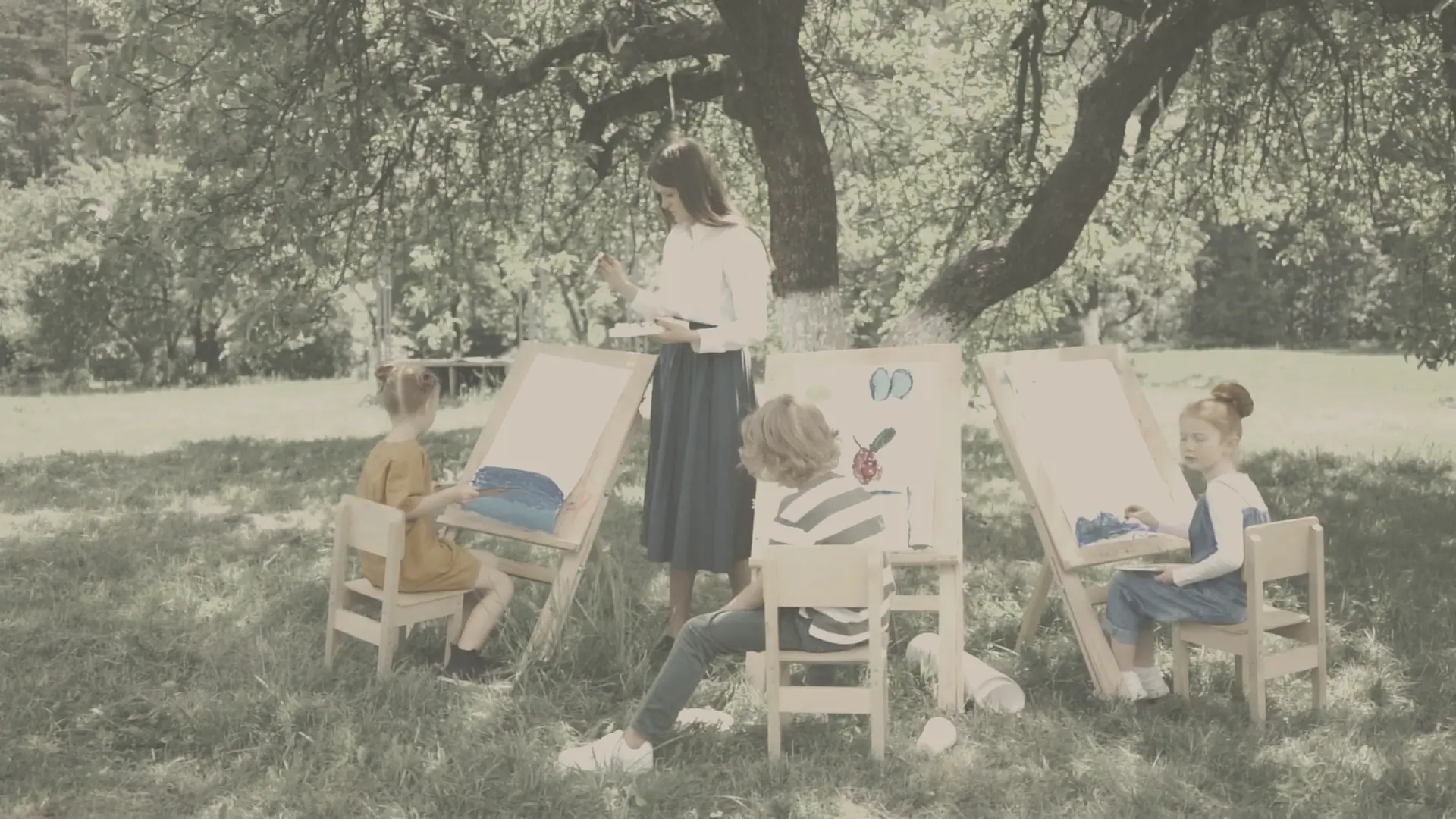
The Easel Goes Outside

Before one sketching morning in a historic chapel courtyard in Singapore, the whole teaching team walked the site a week ahead. On the day the session opened with the history of the building and its Gothic architecture, and only then did anyone draw.

Every site is scouted like this, from a park or a museum hall to a street of shophouses; on site the children explore with all five senses first, then learn composition and light in front of the real thing. Leonardo walked the streets of Florence, Monet stood before his haystacks and Xu Beihong told his students to learn from nature: for generations of art students, sketching outdoors has been a rite of passage, and it is one for ours.

Same Courtyard Same Theme A Different Depth For Every Age

  • What does this building remind you of?
  • Does the light have a colour?
Questions our teachers ask beside an outdoor easel

In The Museum

Three Questions For Any Gallery

Rodin said life does not lack beauty, only eyes that find it: three questions train those eyes in front of any painting, and parents can ask them too.

Ages5–6

An oil pastel study after Van Gogh's wheatfield, with a winding path, two suns and flying crows
Wheatfield After Van GoghOil pastel master study

Ages9–10

An oil pastel copy of a Van Gogh self-portrait in swirling strokes
After Van GoghOil pastel master study
Two studies after Van Gogh: looking, then looking again.
  1. What do you see?

    The first step of looking. Your child describes the picture in their own words, and every answer gets a nod: there is no wrong one.

  2. What do you like about it?

    Feeling before judgement. A bright colour, a small story in a corner or simply that it looks calm: every honest answer is the right one.

  3. If it were you, how would you paint it?

    The question children love. It makes them a participant, not a spectator, and it is where every study after a master begins.

Before And After A Visit
  • Make the artist a story character, not a chapter of art history
  • Save a few works on a phone for a treasure hunt in the rooms
  • Agree gently on hands, distance and quiet voices; a pencil and a small notebook are enough
  • Give permission not to finish: one painting looked at for a long time is a full day
  • Let the picture live at home as a postcard on the fridge, and let your child's version look nothing like it
  • Look across cultures too: Chinese ink painting, which a child meets in the studio from age 4, Japanese ukiyo-e, African wood carving

Between Terms

  • A clay relief of a long-necked dinosaur in a forest

    Long Neck Brachiosaurus · Ages 4–5

    Holiday Classes

    Short courses in the school holidays, some built around one theme or one project. A material your child has only touched in a lesson gets room to go deeper.

    Craft-making · Canvas painting · Clay modelling · Printmaking · Photography
  • A snowy night town on black paper with a large oil pastel house and cut-paper cottages

    Love My Home · Ages 6–7

    Art For The Whole Family

    Family art workshops put parents and children at one table, waking a child's curiosity and stretching everyone's imagination. Family art days do the same at a larger scale, with new friendships for the whole family.

  • A standing paper cut-out of a seaside town with towers and trees behind a modelled clay beach

    Seaside Town · Ages 5–6

    Art Where It Was Made

    A museum, a kiln town, a cave temple, a lakeside under a mountain: a study journey takes art to where it was made, and combines travel with painting tuition on location.

Exhibitions And Competitions

Work Seen By Strangers

We choose by type, never for a famous name: each type asks something different of the work and puts it in front of different eyes.

An aerial map of an imagined future city park with colourful towers, bridges, lakes and a monorail

Future ParkAges 10–11Watercolour and ink

One work from the wall, hung the way a show would hang it.
  • International Painting And Illustration

    Europe, Asia and the US

    Panels of artists judge theme, colour, composition, technique and creativity.

  • Touring Exhibitions

    Galleries abroad

    Work hung in a real exhibition hall, beside young artists from other countries.

  • Comics And Illustration

    Singapore and the region

    Original sequential work: a story told in pictures.

  • Heritage · Environment · Community

    Singapore and each campus's own city

    Briefs about the place a child lives in, and charity briefs where the work raises something beyond itself.

  • Art And Technology

    Singapore and the region

    An idea has to leave the paper: reuse, recycling, model building and 3D printing, judged as art and as making.

The Prize Is Not The Point

A child enters to learn to decide what they believe and to say it in a single image.

Entering also takes them out of the comfort zone, sharpens technique on a professional panel's feedback and sets the work beside peers worldwide; some exhibitions end on stage, microphone in hand, explaining an installation to strangers. We publish no results and no students' names.

Where Art Can Lead

Twelve Fields A Portfolio Can Open

Directions, never promises: the work decides.

From 8 A Direction Of Their Own

From 8, a student chooses a direction by interest, future plans and goals.

It is chosen with the teacher once the foundations are in place, and it can change as interests change.

  • A pencil still life of an upright trumpet draped with a soft scarf

    Fine Art

    The classical foundation a personal style is built on.

    Sketching, charcoal, oil painting and sculpture, with colour through soft pastel, colour pencil and marker

    Opens OntoImages And Objects

    Trumpet And ScarfAges 10–11

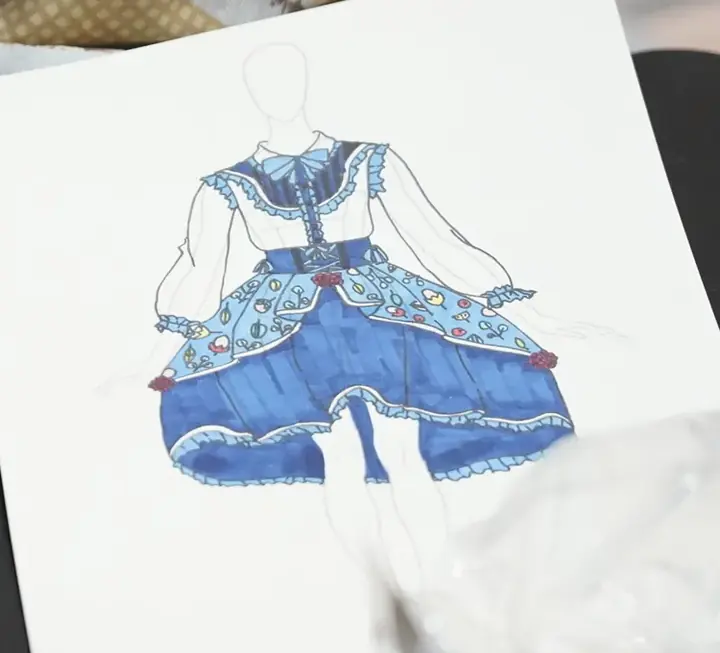
  • A fashion design illustration of a blue ruffled dress on the studio table beside fabric swatches

    Design

    Ideas shaped for a purpose, on paper and on screen.

    Design sketching, graphic design, fashion design, animation design and digital painting

    Opens OntoDesign For How We Live

    Blue Ruffle Dress

Exploration

Art history and outdoor drawing, taking the studio out into the world. It runs alongside either direction, much of it in the holidays.

Beyond The Studio

Choose A Field Arrow keys move

Images And Objects

Fine Art

Ideas made visible, on the artist's own terms.

What Students Make

  • A body of work around one personal enquiry
  • Sketchbooks and studies that show the thinking
  • Exhibition-ready pieces, and the words to talk about them

Painting, sculpture, installation and everything between. Fine art is the field where the question comes from the student, not a client, and courses train a sustained enquiry across months of studio work.

What Reviewers Read For

A voice developing and an honest process: studies, failures, iterations.

Where It Can Lead

  • Practising artist
  • Gallery and curatorial work
  • Art education
  • Creative direction

Art Meets Code is where the two OpenKids programmes meet: a hybrid portfolio of art and code, built with the Tech Programmes.See the Tech Programmes

Your Child's Stage

Start Where Your Child Is

Four stages and a portfolio track, taught as one curriculum, each stage building on the one before.

Ages 3–⁠6ExploreMeeting Colour And Material Through PlayWhat Comes Next Create From 6

Choose A Stage Arrow keys move

First Acquaintance Pioneering Breakthrough

Explore Ages 3–6

A child meets colour, shape and material through play that is carefully planned, and encouragement always comes before correction.

What They Learn

  • Looking closely at pictures and shapes, and a first sense of self
  • Front and behind, a first sense of space
  • Dots, lines and surfaces as design

What They Make

  • A clay octopus family decorated with buttons

    Octopus Is Coming

    Ages 3–4

  • Koinobori carp streamers in washi paper over a watercolour sky

    Koinobori

    Ages 4–5

  • A standing paper cut-out of a seaside town with towers and trees behind a modelled clay beach

    Seaside Town

    Ages 5–6

What You Can Do At Home

  • Notice the thing your child returns to without being asked; that is the signal, not how good the drawing is.
  • Keep a dated folder, the misses included, with a line of what your child said while making it.
Inside This Stage
What They Learn
  • Sketching and master studies, to strengthen form
  • Finger painting, monoprints and clay
Who They Meet
Kandinsky, Malevich, Klee, Frank Stella, Miró, Delaunay, Bosch, Kusama, Höch and Wu Guanzhong, stage by stage
How It Is Taught
Learning is a game at this age: colour relays, shape transformations, first tries at finger painting and monoprinting.

Ready Not Just Older

Stages are entered by readiness within the age band, not by birthday alone, and the teacher who leads the class tells you when the next stage is right.

Progress You Can See

  1. A Folio That Grows Term By Term
  2. Show And Tell Then Weekly Critique
  3. The Same Subject Back Deeper
  4. Work Shown Beyond The Studio

Portfolio

From Sketchbook To Portfolio

A Portfolio Is An Argument

The portfolio track opens from age 8, when a student has a goal. What it builds depends on that goal and on the timing.

Not a folder of best drawings, but evidence that your child can

  1. Observe
  2. Develop an idea
  3. Take feedback
  4. Finish

Tutors read the rough studies as closely as the final piece.

When To Start

Starting early is not pressure at twelve; it is protecting making time before the exam years swallow it.

  1. Ages 7–⁠12

    Foundations, not a portfolio: drawing habits, colour, making things weekly and a kept folder.

  2. Ages 13–⁠14

    Skills sharpen. A sketchbook habit becomes the quiet advantage.

  3. Ages 15–⁠16

    Portfolio building in earnest: themes, developed works, weekly critique.

  4. The Final Year

    Refine, sequence, write the statement, photograph, submit.

  5. Starting At 16–⁠17

    Workable, with honesty about scope: fewer, deeper pieces and a tighter theme. What does not work is compressing four years of habits into four months of panic.

Where will your child apply?

DSA is a Singapore scheme.

DSA Visual Art In Plain Words

Direct School Admission (DSA) lets a Primary 6 child apply to a secondary school on interest, aptitude and potential, beyond the PSLE.

In Singapore The DSA Runway

  1. Primary 3–⁠4Explore broadly
  2. Primary 4–⁠5Go deeper, keep work and records
  3. Primary 5–⁠6Build the folder, practise talking about it
  4. Primary 6Apply

The DSA Year Month By Month

  1. January to MayExplore schools and options

  2. May to early JuneApply on the MOE DSA‑Sec Portal

  3. June to SeptemberInterviews and drawing tests

  4. By mid-SeptemberOutcomes

  5. OctoberRank your choices

  6. Late NovemberAllocation, with the PSLE results

A month-level guide only: dates change with each intake, so check moe.gov.sg.

Is DSA Art Right For Your Child

Not every child who paints is suited to it, and that is fine. Tap each statement that is true for your child.

All four

The preparation has a direction. What is left to plan is the timing, and a free consultation can plan it with you.

Two or three

Some fit and some are still growing, which is common. Talk it through before committing: a free consultation looks at the work your child has already made.

One or none

Not yet, and that is fine. Let your child keep making art for the joy of it: the foundations serve any path, and DSA is only one door.

Talk it through in a free consultation

The DSA Route Step By Step

Public facts and our own steps, with no outcome promised.

  1. Before You Apply

    Every Primary 6 student can apply, with no fee on the MOE portal and up to three choices. A place accepted through DSA is a commitment: no Secondary One posting, and no transfer after the PSLE results.

  2. What Panels Look For

    Evidence over enthusiasm: sketchbooks and growth over time rather than five polished pieces, with observational drawing at the core.

    • An eye of their own
    • A story across the pages
    • The child's own voice
    • Fit with the school's actual programme
  3. On The Day

    Shortlisted students typically face a Visual Arts interview with an on-the-spot drawing test, and some schools set a selection test first. Mock interviews and regular practice make the brief feel familiar rather than frightening.

  4. The Offer

    Schools make a conditional offer before the PSLE results, and the student then needs the school's minimum PSLE criteria. Families rank their offers in the MOE portal; a submitted ranking cannot be changed.

After Primary 6

The art path does not close after Primary 6. Three doors open inside secondary school; check each school and moe.gov.sg for the current terms.

  • AEP, the Art Elective Programme: the Ministry of Education's enhanced art track at selected schools, with lessons from Term 1
  • EAP, the Enhanced Art Programme: Advanced Art in Secondary 3 and 4, entry by a school selection in Secondary 2, so portfolio work starts in Secondary 1
  • DSA-JC: applying to junior colleges on artistic talent before the O-Level, with O-Level Art as the academic backbone

For a child already past the DSA-Sec window at 12, the track continues as an art-school portfolio, paced around the exam years.

Future Pathways

One Body Of Work

What a young artist carries out of the studio is years of work:

seen by people outside the classroom, gathered into a portfolio and theirs to present.

Each layer builds on everything below it.

  1. The Craft

    Ages 3–18

    The base layer, laid at every stage: a trained eye and finished work in many materials.

    How the method works
  2. Work Seen Outside

    When Ready

    Then the work goes out, in front of people who have never met the artist.

    Exhibitions and competitions
  3. The Portfolio

    From Age 8

    With a goal, the strongest pieces and their process become a portfolio: DSA in the primary years, art school in the teens.

    How the portfolio is built
  4. Art School And University

    The Final Years Of School

    The whole body of work is shaped into applications, with the OpenKids Future Pathways team, starting with a free consultation.

    How the admissions guidance works
No one can guarantee admission.

What a student carries into the room is the work itself.

Book a Free Consultation

Questions

What Parents Ask First

  • What age can my child start?

    At any age from 3 to 18. Children of 3 to 6 begin in Explore; older children join the stage that fits their age and skills.

    Book a free trial for ages 3–6
  • My child is 12 and has never had art lessons. Is it too late?

    No. Older beginners start with the same foundations of looking, drawing and colour, with subjects suited to their age, and move on as their skills grow.

    Book a free trial for ages 10–18
  • What is REMAT?

    REMAT is the spiral curriculum behind every OpenKids art programme, developed in Singapore by TAFA Group, the education group behind OpenKids, on Jerome Bruner's theory. Key ideas return at every stage, each time deeper, from age 3 to 18. Its five modules are Regroup, Extend, Multi, Atman and Theme.

    How the method works
More Questions10 More
  • When should we start a portfolio?

    When there is a goal: for Direct School Admission (DSA) in Visual Art, usually one to two years before the Primary 6 application (check moe.gov.sg for each year's dates), and for art school, across the teen years.

    Plan it in a free consultation
  • Can you guarantee a DSA place or an art-school offer?

    No. No one can promise admission; we help a student build a strong, honest portfolio and prepare for the interview and the drawing test.

    Talk it through in a free consultation
  • Where can my child's work be shown?

    In international youth art and illustration competitions, touring exhibitions of children's work and themed community competitions, entered for what a child learns rather than for the prize.

    Exhibitions and competitions
  • Is the trial class really free?

    Yes, with no obligation after it: your child joins a real lesson, and afterwards the teacher talks you through where they could start.

    How the first class runs
  • How much are the classes?

    Fees are not published online: they follow the learning plan made with you after the trial class and are set out in writing before you commit.

    What happens after the first class
  • How should I respond to my child's work at home?

    The way our teachers do: encouragement before correction, and praise that names the decision rather than the talent (the smooth line on the dolphin, the colour chosen for the leaves).

    Looking at art together
  • Can a portfolio be built alongside exams?

    Yes, if it starts before the application year: one studio session a week, lighter through exam blocks and deeper in the holidays.

    When to start
  • Can my child use AI tools in the portfolio?

    Yes, as a disclosed tool and never a substitute; and since some competitions refuse AI work entirely, the drawing underneath still matters.

    AI in the portfolio
  • Should the portfolio be digital or traditional?

    Either can carry a strong application, and the medium is chosen project by project; in both, schools look for the same observation, ideas and process.

    Digital or traditional
  • Can my child make a living from art?

    Yes, and rarely as the painter in a garret: creative skills now feed design, games, animation, film, advertising, product and technology. What manages the risk is evidence, starting with a portfolio habit in the teens.

    Where art can lead

Keep Reading

Read Before The First Class

  • Early Years

    What Ages 3 To 5 Learn In Art Class

    Parents looking for a toddler art class usually want to know one thing: what will a three-year-old actually do there? Here is what child-development milestones, Singapore's preschool framework and the REMAT curriculum say about ages 3 to 5.

  • Primary Years DSA

    DSA And The Art Portfolio Explained

    Direct School Admission lets a Primary 6 child earn a secondary school place through a talent such as visual art. Here is how the 2026 exercise works, what schools look at and what an art portfolio usually holds.

  • Teen Years Art School

    When To Start An Art Portfolio

    A serious portfolio is built over years, not months. Here is the age-by-age timeline that keeps the final eighteen months calm instead of frantic.

Your First Visit

Your Child's First Class

The weekly class is the core; everything that widens it is gathered in Beyond The Studio.
  1. Say Hello

    Message your nearest campus on WhatsApp: it replies within 48 hours with trial times, and HQ answers the same day if it does not.

  2. Meet The Teacher

    The teacher who leads the class welcomes your child, and talks you through what comes next.

  3. A Real Lesson

    A full lesson with children near their age, not a demonstration.

  4. Finding The Right Stage

    The teacher sees where your child is, so they are placed by readiness, not by birthday alone.

  5. Your Learning Plan

    Afterwards, a learning plan, with every fee in writing before you decide.

  • Inside The First Class
    1. Welcome And The Day's Theme

      The teacher says hello, sets a few rules a child can follow and opens the day's theme with a question.

    2. Meeting The Materials

      Crayons, paint, clay or brushes come out, with a short demonstration of each.

    3. Making

      A first piece of the child's own, where exploring matters more than a perfect result.

    4. Talking About The Work

      Children hold their work up and say a few words about it to the group.

Before You Book

Book a Free Trial
The Fee
The first trial class is free, and every fee is in writing before you decide.
The Teachers
Every teacher certifies on the curriculum, level by level, before their first class, and one central curriculum team keeps every campus teaching the same programme.
The Record
Parents follow their child's learning record on MagiBox; a record that moves with the family to any campus is where the system is heading.

Pick A Campus

Region

Campus

The message opens with your campus filled in; add your child's age.

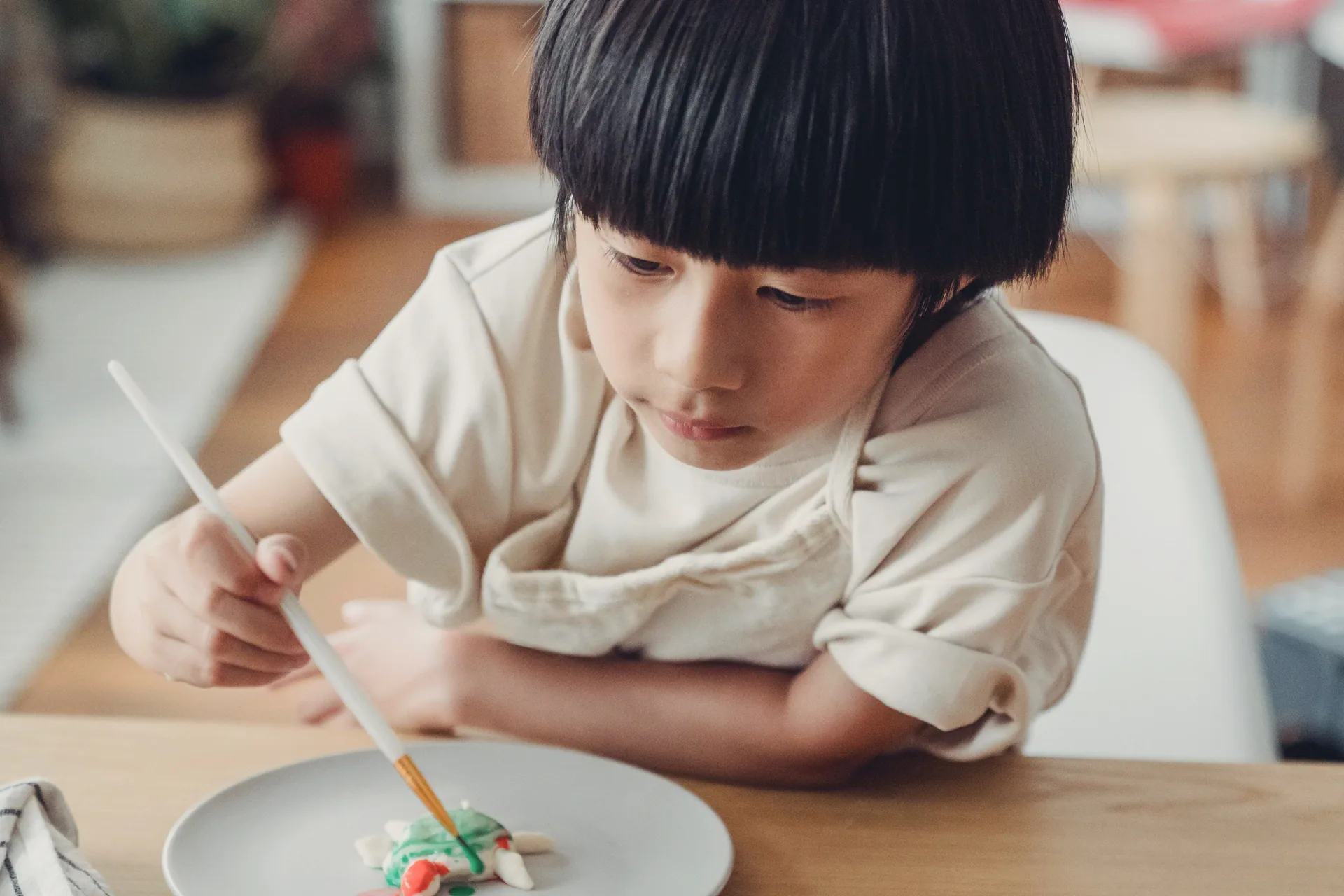
A boy painting a small clay figure on a plate, absorbed in the brushwork

Find A Class Near You

For Families

Message your nearest campus on WhatsApp. The first trial class is free.

Book a Free Trial
For Global Partners

Art and Tech Programmes proven in Singapore and one operating system behind them, now open to Global Partners worldwide. The first conversation is confidential and carries no obligation.

Become a Global Partner
WhatsApp +65 8990 1988
Book a Free Trial