Skip to content

Two Systems

The Two Systems Side By Side

Each programme is complete on its own, and both are built the same way.

Every figure here is the same one the Art and Tech pages give.

The Art and Tech programmes compared
Art ProgrammesTech Programmes
Ages 3–⁠18Ages 4–⁠18
Four stages and one Portfolio track, breaks at 3 · 6 · 8 · 10Four levels per track at 7 · 10 · 13 · 16, Robotics from 4
From 3, and from 8 a direction: Fine Art · Design · ExplorationThree tracks: Robotics · AI Coding · 3D Design
REMAT, five modules: Regroup · Extend · Multi · Atman · ThemeFive STEAM habits of mind on one project-based core
Bruner's spiral curriculumBruner's spiral and Bloom's six levels
Five ATL strands, 3–⁠18: Thinking · Communication · Social · Research · Self-ManagementFive STEAM strands across nine age bands
Exhibitions and international youth art competitionsCompetition training from age 8, by readiness
Direct School Admission (DSA) Visual Art in Singapore, then an art-school portfolioThe technology portfolio for DSA, then a university portfolio after 16
A free trial classA free trial class

Two Programmes

Choose One Or Take Both

Each programme is a complete education on its own, from a first class to advanced work.

Taken together, they build the same habits: looking closely, making things and showing the work.

In Every Class

One Hour In Each Programme

Before the frameworks, the hour itself:

what a lesson holds in each programme, in the order it happens.

Art Programmes

  1. Welcome And The Day's Theme

    A hello, then a question that opens the theme.

  2. Meeting The Materials

    Each material shown before a child picks it up.

  3. Making

    A piece of their own, with room to explore.

  4. Show And Tell

    The work held up and talked about.

Inside a first Art class

Tech Programmes

  1. Mission Briefing

    A problem the build has to solve.

  2. Design And Build

    A machine takes shape, one step at a time.

  3. Test And Improve

    It runs, it fails, it gets better.

  4. Demo

    The build is shown working, and the changes explained.

Inside a first Tech class

By Age

Where Can My Child Start

Pick your child's age to see where they would begin in each programme, and tell us whether they lean to making, building or both.

A free trial class settles the exact starting point.

Art And Tech On One Age Axis

Art

  1. Explore, ages 3 to 6
  2. Create, ages 6 to 8
  3. Develop, ages 8 to 10
  4. Advance, ages 10 to 18

Portfolio

  1. Portfolio Track, ages 8 to 18

Robotics

  1. Robotics, ages 4 to 18

AI Coding

  1. AI Coding, ages 7 to 18

3D Design

  1. 3D Design, ages 7 to 18

Competition

  1. Competition Training, ages 8 to 18

University

  1. University Portfolio, ages 16 to 18

Your child's age

  • Does your child lean to making things, building systems, or both

    Genuinely common, and an advantage: pair one class from each programme. The work grows into one hybrid portfolio, not two. Where Art meets Tech

Art Programmes Age 7Pair one from each

Create

Ages 6–8

Ideas before technique: drawing from memory, form in three dimensions and a first look at art history.

Tech Programmes Age 7Pair one from each

Robotics AI Coding 3D Design

Ages 7–9

Mechanisms and first sensors, block coding and playful logic, and first 3D models to spin, scale and print.

Competition training opens from age 8, by readiness.

  • Signals They Are Ready For More
    • Returns to one interest without being asked
    • Can lose a match or a critique and come back next week
    • Finishes small projects, not just starts them
    • Asks for harder problems, not just more screen time

One Way Of Teaching

What The Two Programmes Share

Different materials, the same idea of how a child learns, and the same operating spine from the first class to the portfolio.

  • A Question Before A Textbook

    An art lesson opens on a theme led by questions, a tech lesson on a real problem to solve. Neither starts from a worksheet.

  • Ideas Return Deeper Each Year

    Both follow a spiral curriculum after Jerome Bruner: a key idea comes back at every stage, each time with more depth and wider use.

  • Every Project Ends With Something Made

    A painting, a model, a program or a machine that works. Children learn by making, and the making shows what they have learned.

  • Made Critiqued Made Again

    The weekly critique in the studio and the build, test and improve loop in the workshop are one habit: work is reviewed openly and improved honestly, and feedback is fuel, not judgement.

  • Placed By Readiness

    In both programmes the trial class is a placement: the teacher sees where a child is and places them by readiness, not by birthday alone, and a child moves up when the work shows it.

  • Work That Leaves The Room

    Exhibitions, competitions and portfolios put the work in front of people outside the classroom, and teach a child to present and defend it.

  • The Same Six Steps To A Portfolio

    Consultation and assessment, a customised learning plan, progressive skill building, portfolio development, interview preparation and application guidance: the same six steps in Art and in Tech.

  • The Same First Class

    One message on WhatsApp, a real lesson with children near their age, a gentle assessment and a learning plan with every fee in writing: the first class runs the same way in both programmes.

Art × Tech

Where Art Meets Tech

Art × Tech is not a slogan.

The two systems already touch in three places, so a child who takes both is on one journey rather than two timetables.

  • Draw On Screen

    In ArtFrom age 8 the Design direction includes digital painting and animation design: drawing that lives on a screen.

    In TechThe 3D Design track turns drawings into models to spin, scale and print: the track where art and engineering stop being separate subjects.

  • Ideas That Leave The Screen

    In ArtA drawing becomes a model becomes an object: the studio's AI and 3D printing course takes an idea off the page.

    In TechFrom screen to print: finished models are checked for real fabrication, then printed and held.

  • Ask Before You Prompt

    In ArtEvery art lesson opens with a theme rather than a textbook, led by questions.

    In TechEvery tech lesson opens with a challenge rather than steps to copy: a real problem the build must solve.

  • Where Both Programmes Lead

    Among the competition types students enter are art and technology creative competitions, where a drawing, a model and a printed object can sit in one exhibition. A child who takes both programmes builds one hybrid portfolio: a few visual works beside one or two working projects, joined by a single line of curiosity.

    Where both programmes lead

Campuses

Where It Runs

Where each programme is taught today, market by market, and where Art and Tech share one roof.

Programmes by market
MarketProgrammes Taught
SingaporeMalaysiaArt · Tech · Both Under One Roof

Future Pathways

Where Both Programmes Lead

Art or Tech, the journey builds the same thing:

a body of work that grows for years, is judged outside the classroom and opens the next door, from school selection to university.

Four stages, one growing body of work.

Each stage builds on everything below it.

  1. The HabitsAges 3–18

    Art from 3 and Tech from 4. Year by year a child keeps finished work and builds the habits behind it: looking closely, testing an idea and trying again.

    • Habits of mind
    • Finished work
  2. Work Judged OutsideWhen Ready

    The work meets people who have never met the child, under a deadline that does not move. In Art that happens when the work is ready; in Tech, from age 8, by readiness.

    • Work shown in public
    • Work under a deadline
  3. The PortfolioFrom Age 8

    In Singapore, the portfolio behind a Direct School Admission (DSA) application. In the teens, an art-school portfolio or a technology portfolio for university.

    • Multi-year progress
    • A practised interview
  4. University AdmissionsThe Final Years Of School

    Portfolios and records shaped into university and art-school applications, with guidance from the OpenKids Future Pathways team. It starts with a free consultation.

    • An application-ready portfolio
    • Guidance on the applications

The Admissions Step

How The Guidance Works

Four steps with the OpenKids Future Pathways team, built on the work a student has already made.

  1. Strategy

    School research, a review of the student's profile and an application roadmap matched to their work and goals. Schools are chosen as a course to attend, not a ranking to chase.

  2. Evidence

    Curating the portfolio and filling its gaps: which projects to deepen, which competitions to enter, what to create next.

  3. Story

    Personal statements and essays in the student's own voice: a specific moment, the work that proves the interest, the link to the course, and a door left open.

  4. Interview

    Mock interviews and portfolio walkthroughs, practised until the student can present their work with confidence.

In Singapore at 16, the same evidence folder serves both DSA-JC for junior college and the polytechnic Early Admissions Exercise (EAE). Outside Singapore, it serves school and university applications.

We plan, structure, question and edit; the sentences are the student's own. No one can promise an offer, and the work starts a year or more before applications, not in the final semester.

  • What A Free Consultation Covers
    1. A conversation about your child: age, interests, existing work and goals, not a sales script.

    2. An honest read on where things stand, even when the answer is not yet.

    3. A written plan for the portfolio and the applications, with every fee in writing before you decide.

    What A Family Leaves With

    • An application roadmap and a school strategy
    • A curated portfolio
    • Statements and essays in the student's own voice
    • Interview practice before it counts
    • Deadlines and paperwork tracked

Every stage hands its evidence to the next: the folder kept at six shows where to point at seven, and the records at twelve are the raw material at thirteen.

No one can guarantee admission.

What a student carries into the room is the work itself.

Book a Free Consultation

Questions

Questions Parents Ask

  • Which programme should my child start with?

    Start with what your child already loves. Art Programmes begin at 3; Tech Programmes begin at 4 with robotics, and AI coding or 3D design open from 7. After a free trial class, the teacher recommends a starting point.

    Find where your child starts by age
  • Can my child take Art and Tech at the same time?

    Yes. The two programmes are designed to run side by side, and some campuses teach both under one roof. From seven to twelve the overlap is the point: children who build robots draw better machines, and children who draw see better designs.

    See the campuses that teach both
  • How do two programmes fit into one week?

    Each programme is its own weekly class, so a child can take one or both. One deep commitment and one lighter one is a rhythm most families can keep, and the teacher will say at the trial whether two classes suit your child's age and energy. Holiday classes and workshops at every campus widen the week without adding to it.

  • What ages do the programmes cover?

    Art Programmes run from 3 to 18, with the Portfolio track open from 8. Tech Programmes run from 4 to 18: robotics 4–⁠18, AI coding and 3D design 7–⁠18, and competition training from 8 by readiness. From 16, students can also take university-application technology training.

  • How will I see my child's progress?

    The work itself is the record: a folio and sketchbook in Art, a design log and saved projects in Tech. It is shown at the end of lessons, at showcase days and exhibitions, and in the learning plan the teacher revisits with you. Parents follow their child's learning record on MagiBox; a record that moves with the family to any campus is where the system is heading.

  • Can I sit in on the class?

    The lesson is your child's: parents usually wait outside so the class runs as it always does, and the teacher who led it talks you through what they saw afterwards. Ask the campus when it confirms the time.

    Book a free trial
More Questions5 More
  • Do you help with school and university applications?

    Yes. Both programmes have a portfolio path: Direct School Admission (DSA) preparation in Singapore, then portfolios for art-school and university applications in the teens. University applications begin with a free consultation. No outcome is ever guaranteed.

    Book a free consultation
  • What happens after 16?

    Art Programmes run to 18, with the Portfolio track alongside. The Tech course tracks run to 18, and from 16 university-application technology training runs alongside them; competition and research work can continue into the university years, to 24. Both programmes then shape the work into applications, starting with a free consultation.

    Book a free consultation
  • Is the trial class really free?

    Yes. There is no charge for the trial class. If you decide to continue, the campus sets out the fees in writing first.

    More questions about the trial
  • How much are the classes?

    Fees are not published online. After the trial class, the campus goes through your child's learning plan with you and puts every fee in writing.

    More questions about the trial
  • How do we get started?

    Choose a campus near you and book a free trial class. Your child joins a real lesson with students of a similar age, and the teacher recommends where to begin.

    Find your campus

Further Reading

Guides For Parents

  • Future Pathways

    When To Start An Art Portfolio

    A serious portfolio is built over years, not months. Here is the age-by-age timeline that keeps the final eighteen months calm instead of frantic.

  • Future Pathways

    An Art Learning Roadmap From 3 To 18

    What a child learns in art at 3, at 8 and at 16, stage by stage. The map follows REMAT, the spiral art curriculum developed in Singapore by TAFA Group, and the five learning skills that run through all of it.

  • Tech Programmes

    What To Look For In A Coding Class At 7

    Seven is a sensible age to start coding, provided the class fits how a seven-year-old thinks. What the research, Singapore's screen-use guidance and what schools already teach suggest you look for, and what to ask at a trial class.

  • Tech Programmes

    What Children Can Really Learn About AI

    Classes labelled AI are everywhere, and the labels promise a lot. What children can genuinely learn about artificial intelligence at each age, what Singapore's schools already teach, and how to tell a real class from time spent with a chatbot.

Pick A Campus

Region

Campus

The message opens with your campus filled in; add your child's age.

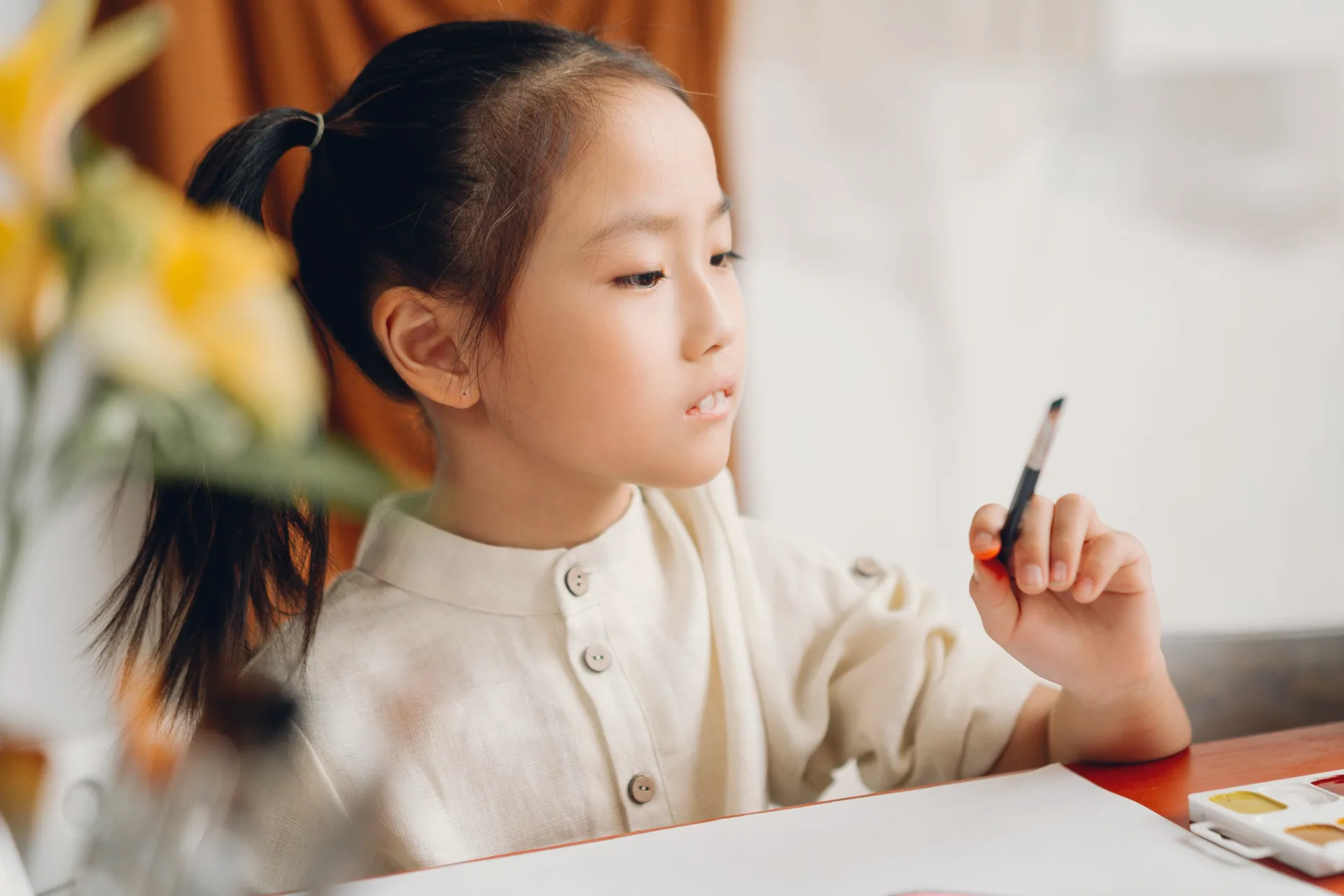
A girl painting with watercolours, her brush raised

Find A Class Near You

For Families

Message your nearest campus on WhatsApp. The first trial class is free.

Book a Free Trial
For Global Partners

Art and Tech Programmes proven in Singapore and one operating system behind them, now open to Global Partners worldwide. The first conversation is confidential and carries no obligation.

Become a Global Partner
WhatsApp +65 8990 1988
Book a Free Trial