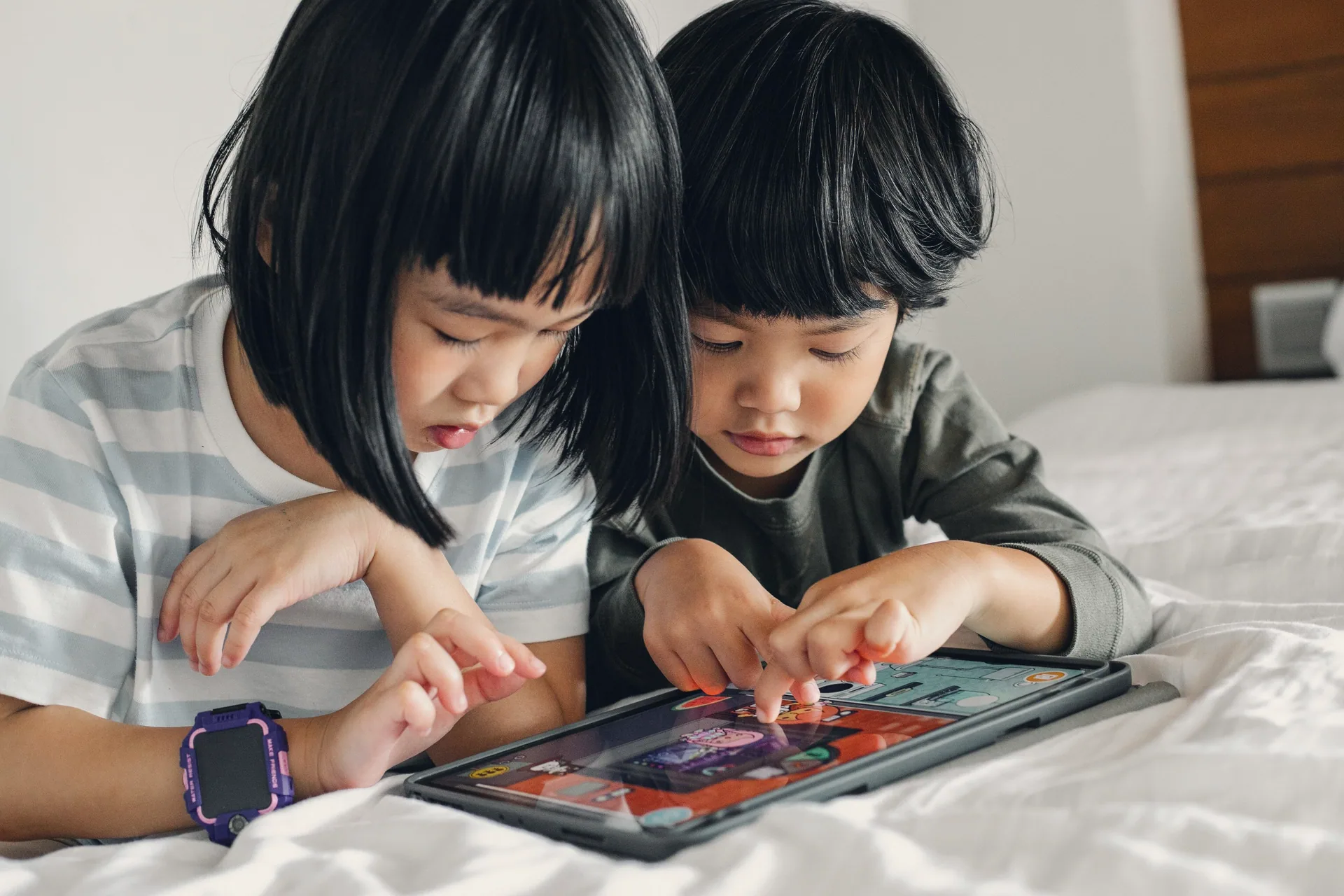
Coding classes for 7-year-olds should be hands-on and built around making things: sequencing, patterns and debugging, learned through play, block-based tools and small robots. Singapore's Ministry of Health advises less than two hours of screen use a day outside schoolwork at this age, so choose a class that mixes screen time with unplugged activities.
If your child is seven and you are weighing a coding class, the timing deserves a thought. In Singapore this is usually the year of Primary 1: most children start P1 in the year they turn seven, so a first coding class often arrives alongside new routines, new friends and a longer school day. Coding does reach every primary pupil at school eventually. Since 2020, all upper primary pupils have been required to go through the Code for Fun programme run by IMDA and MOE, or a comparable coding programme. A class at seven is therefore an early start, not a race to keep up, and it should feel like one.
What A 7-Year-Old Can Really Learn
At this age, coding is less about a programming language than a way of thinking. Researchers call it computational thinking: breaking a task into steps, putting the steps in order, spotting a pattern and repeating it, then working out why the result is not what you expected. A seven-year-old can practise all of this with picture blocks, arrow cards or a small robot on the classroom floor. Typed code can come later.
- Sequencing — putting instructions in the right order, and seeing what happens when they are not
- Patterns and loops — noticing a step that repeats and telling the computer to repeat it
- Cause and effect — pressing, tapping or triggering a sensor to make a character or robot respond
- Debugging — finding the step that went wrong and fixing it without starting again
- Design — deciding what a project should do before building it
The evidence for starting here is encouraging. A 2021 review in Frontiers in Education examined 21 empirical studies of four coding apps used with children aged seven and under, among them ScratchJr and Lightbot, and found that all four supported the development of computational thinking. The same review carries a caution that matters more to parents than the headline. Open-ended apps such as ScratchJr were not shown to beat more guided ones such as Lightbot; what matters, the author concludes, is how the learning experience is structured and facilitated. An app on its own is not a class. A teacher who knows when to step in, and when to let a child wrestle with a bug, is.
Screens Robots And Unplugged Play
A good class for a seven-year-old moves between three kinds of activity. A 2017 study by Alex Pugnali, Amanda Sullivan and Marina Umaschi Bers followed 28 children aged four to seven as they learned with two very different tools: a graphical coding app on a tablet and a tangible robotics kit. The authors concluded that the type of interface does affect what children learn, but is only one of many factors, and that tangible and graphical tools each foster different kinds of learning.
The third kind needs no device at all. CS Unplugged, a project of the Computer Science Education Research Group at the University of Canterbury in New Zealand, teaches computer science through games and puzzles that use cards, string, crayons and plenty of running around. Sorting a line of classmates by height is an algorithm. Guiding a partner across a grid with spoken directions is a program. For a seven-year-old these activities are not a break from coding. They are coding with the screen switched off.
What Singapore's Screen Guidance Means For A Class
Singapore's Ministry of Health updated its Guidance on Screen Use in Children in January 2025. For ages seven to twelve it advises less than two hours of screen use a day unless the use is related to schoolwork, no screens during meals or in the hour before bed, and a screen-use plan the family agrees together. The guidance separates active screen use, where a child is engaged in thinking or doing, from passive viewing, and it is candid that evidence for any exact safe limit is limited. The World Health Organization's 2020 guidelines add the other side of the balance: children aged five to seventeen should average at least 60 minutes a day of moderate-to-vigorous physical activity, and limit sedentary time, particularly recreational screen time.
- Hours Of Screen Use A Day Outside Schoolwork For Ages 7–12
MOH - Under 2
- Screen-Free Before Bedtime
MOH - 1 hour
- Daily Average Of Moderate-To-Vigorous Activity For Ages 5–17
WHO - 60 min
A coding class is active screen use, the kind the guidance encourages. It is not schoolwork, though, so it still counts towards your child's day. So the useful question for any centre is not whether children use screens, but for how long and to do what. A class that brings out tablets for the moments that need them, and fills the rest with building, moving and talking, sits comfortably within the guidance and suits a seven-year-old's energy.
The guidance also asks parents to stay present and engaged when children use devices, and to talk often about what they are doing. A coding class makes that conversation easy. Ask your child to show you the project, then to break it on purpose and fix it again. Explaining a bug to a parent is debugging too.
Signs Of A Good Coding Class
- Children make something they can show you
- Worksheets, or copying code from the board
- Short screen stretches between hands-on work
- An hour or more facing a screen
- Bugs treated as part of the lesson
- A teacher who fixes every mistake for the child
- Placement by readiness
- Placement by birthday alone
- A clear next step when your child is ready
- The same course repeated with new themes
- Plain answers about screen time
- Vague answers about how class time is spent
Questions To Ask At A Trial Class
- What will my child have made by the end of the first term?
- How much of each session is on a screen, and what happens in the rest?
- What do you do when a child gets stuck or frustrated?
- How do you decide which level my child starts at?
- Where does this lead in two or three years?
Then watch your child, not the room. A seven-year-old who comes out explaining how they fixed the robot's wrong turn has had a good lesson. One who can only tell you which game they played may have had a pleasant hour and not much more.
A First Class At OpenKids
At OpenKids, coding sits in Tech Programmes for ages 4 to 18, with curriculum by Futurum Academy. Children are placed by readiness, not birthday, so a seven-year-old starts at the level their thinking is ready for. Tech Programmes and Art Programmes are the two programme systems that form one growth journey from age 3 to 24, with competition training and admissions guidance inside the same path. If AI is on your mind as well, our guide to what AI classes can really teach children sets out what is realistic at each age.
The first trial class is free, and every fee is shown in writing before your family decides anything. OpenKids has campuses in Singapore and Kuala Lumpur. A campus replies on WhatsApp within 48 hours, and HQ on +65 8990 1988 replies the same day. Bring the questions above. A good class will be glad you asked.
Frequently Asked Questions
Is 7 too young to start coding?
Not if the class is designed for how young children learn. A 2021 review of 21 studies found that coding apps used with children aged seven and under supported computational thinking, and concluded that what matters is how the learning is structured and facilitated. Look for play, building and short screen time rather than typed code.
Does a coding class count as screen time?
Yes, time on a device counts. Singapore's Ministry of Health advises less than two hours of screen use a day outside schoolwork for ages 7 to 12, and encourages active use, which engages a child's thinking, over passive viewing. Ask how much of each session is spent on a screen.
Will my child learn coding at school anyway?
Yes. Since 2020, all upper primary pupils in Singapore have been required to go through IMDA and MOE's Code for Fun programme or a comparable coding programme, and in 2024 the two announced AI for Fun elective modules for schools from 2025. A class at seven is an early start, not a requirement.
Should a 7-year-old learn coding with robots or on a tablet?
Ideally both, plus unplugged games. A study of children aged four to seven using a tablet coding app and a tangible robotics kit found that each kind of tool fostered different learning, and that the interface was only one of many factors.
How do I know my child is ready for a coding class?
Signs worth noticing include enjoying puzzles and building toys, following a short sequence of instructions and asking how things work. The simplest test is a trial class: notice whether your child comes out able to explain what they made.
Is the first Tech Programmes class at OpenKids free?
Yes. The first trial class is free, and every fee is shown in writing before a family decides. A campus replies on WhatsApp within 48 hours, and HQ on +65 8990 1988 replies the same day.