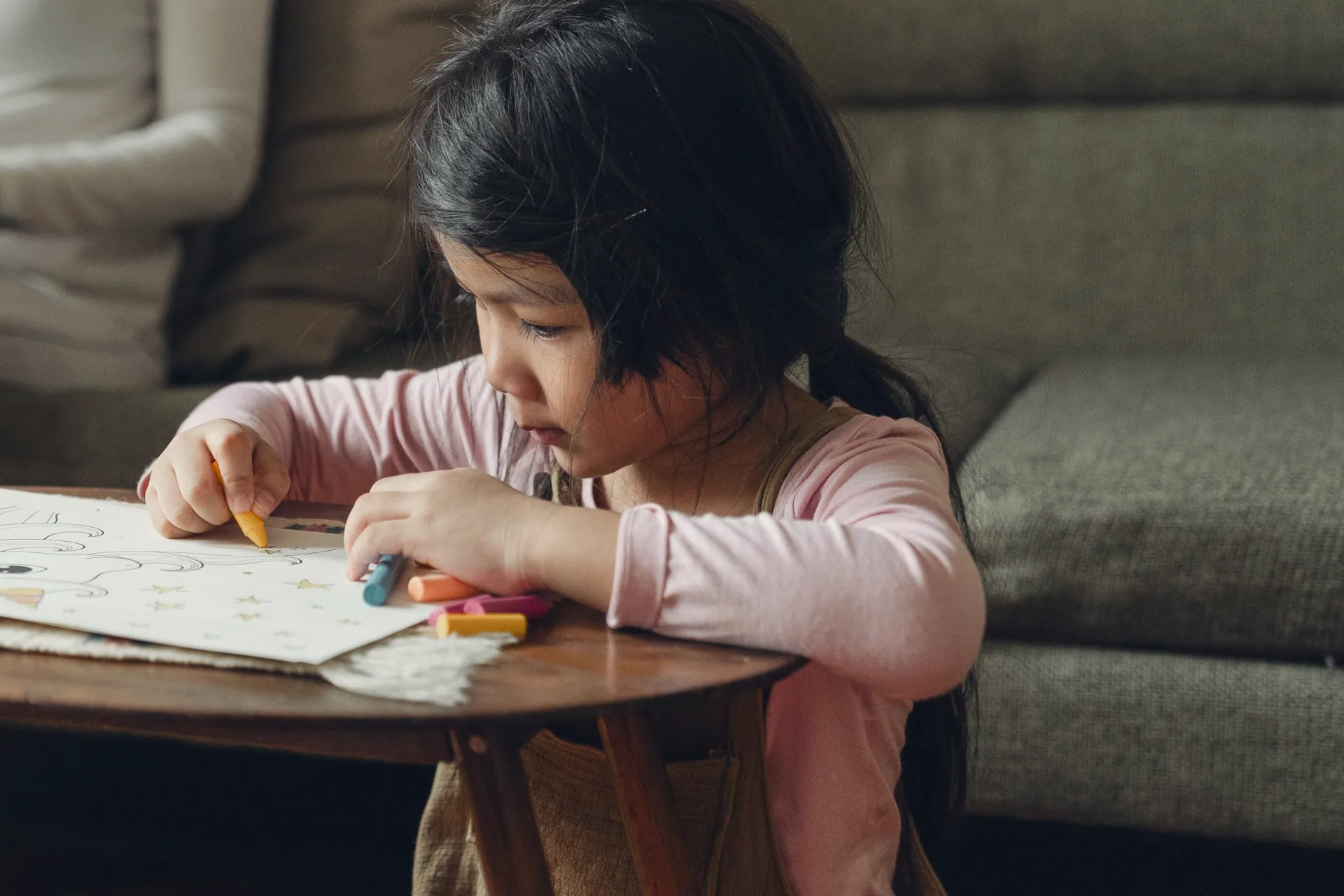
There is no single right age to start art classes. TreeArt, the creative-arts brand of the OpenKids ecosystem, frames readiness by developmental stage: before about age 5 children scribble to express themselves and should draw freely, while from around 5 they begin telling stories in their drawings and are ready for systematic guidance. Watch the child's work and interest, not the calendar.
It is the most common question an art teacher hears: what age should my child start? TreeArt — the art school behind OpenKids Art Programmes — gives an unusually honest answer in its own guide: the number is the wrong thing to ask about. Children don't fall behind because they started late; they fall behind when the right things aren't done at the right stage.
Two stages, not one starting gun
Before roughly age 5, a child is in the scribbling stage. Lines, circles and blocks of colour are not failed drawings of real things — they are a direct read-out of an inner world. The correct teaching here is almost anti-teaching: let them draw freely, without correction, template-copying or forced colouring-in, all of which quietly kill imagination. From around age 5, drawings change — figures gain movement, scenes gain logic, a picture starts to tell a story. That shift signals the brain is ready for guidance that directs rather than restricts.
Three readiness signals worth watching
- A developmental shift — around age 5, the move from scribble to story.
- A change in the work — aesthetic awareness, a hunt for detail, narrative appearing in the drawing.
- Self-initiated engagement — the child chooses to draw, stays with it, and is excited by what they make.
Why the OpenKids journey is built this way
This is exactly why OpenKids Art Programmes place children by readiness, not birthday — running from age 3 to 18, with the early years protecting free expression and the later years adding technique, then portfolio. Start when the signals appear, and the same journey carries the child all the way to an art-school portfolio. Start with a rigid template too early, and you spend the next decade rebuilding a confidence that never needed breaking.
Two companion guides go further. For the youngest, art classes for toddlers sets out what a class for ages 3 to 5 should actually teach, and the children's art learning roadmap follows the same child stage by stage to 18. If Direct School Admission is on your mind for Primary 6, our guide to DSA and the art portfolio explains how it works.
Frequently Asked Questions
What is the best age to start art classes?
There isn't a single best age. Before about 5, children benefit from free, uncorrected drawing; from around 5, when their drawings start telling stories, they're ready for structured guidance. Readiness signals in the child's own work matter more than a fixed age.
Can starting formal art too early harm a child?
It can. Rigid early instruction — template copying, forced colouring inside the lines — tends to suppress imagination during the scribbling stage. The recommended approach is free expression first, structured technique once the child shows narrative and detail in their drawings.